

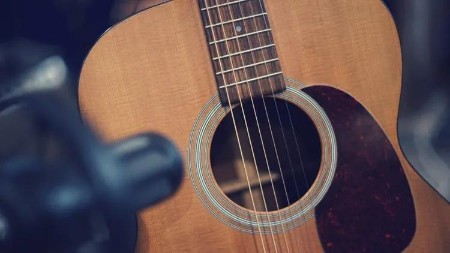
Acoustic Guitar Recording Guide
Published 11/2025
Duration: 34m | .MP4 1280×720 30fps(r) | AAC, 44100Hz, 2ch | 660.62 MB
A practical, step‑by‑step guide to recording, layering and mixing acoustic guitars that sound polished and musical.
What you’ll learn
– How to prepare for a recording session – essential steps to improve your guitar sound, both musically and technically.
– Microphone types, what they sound like and when to use them
– Different recording techniques, what they sound like and what to avoid
– Guitar layering techniques and the textures they produce
– Basic mixing steps to refine your recorded material and help it sit better in a full mix
– Different reverb types, and which ones are right for applying on acoustic guitar
Requirements
– Playing guitar,
– An acoustic guitar
– Access to a basic recording setup (audio interface, microphone, headphones)
– A DAW (Digital Audio Workstation)
Description
Recording acoustic guitar should be simple. but in reality, it’s one of the easiest instruments to get wrong.
Boomy lows, harsh highs, lifeless DI tracks, rooms that sound terrible on mic – most of the time, the problem isn’t your gear, it’s the decisions you make before and during recording.
In this short, focused course, I’ll walk you through a practical, real‑world approach to recording acoustic guitars that actually sound musical and mix‑ready, whether you’re working in a home studio or a professional space.
What you’ll learn
By the end of this course, you’ll be able to:
Plan your recordings so you’re not “fixing it in the mix” later
Choose the right playing style (pick vs. fingers) and control your dynamics for a more consistent, professional sound
Make the most of an untreated room by finding the best recording spot and minimising unwanted reflections
Understand the differences between condenser, ribbon and dynamic microphones and pick the right type for your guitar and space
Use practical mic placements (single‑mic, dual‑mic and simple stereo techniques) to capture a balanced, natural tone
Layer and double‑track acoustic guitars to create width, depth and richness without cluttering the arrangement
Shape your sound in the mix with EQ (including Pultec‑style tone shaping), compression and gentle saturation
Choose and dial in different reverb types (room, plate, hall, spring) so your acoustic sits naturally in the mix
Who this course is for
Home producers and songwriters who want their acoustic tracks to sound more like “records” and less like rough demos
Intermediate users who understand the basics of recording but struggle to get consistent acoustic guitar results
Anyone who wants a clear, step‑by‑step framework instead of random YouTube tips
How the course is structured
The course is split into short, focused lessons you can watch in one sitting or dip into as needed:
Setting the mindset and expectations for recording acoustic guitar
Preparing your performance and choosing the right space
Understanding microphone types and how they affect your sound
Practical mic placement techniques that work in real rooms
Mixing essentials: EQ, Pultec‑style tone shaping, compression and saturation
Reverb choices and settings to place your guitar in the right space
Final thoughts and next steps to keep improving your recordings
You don’t need expensive gear to benefit from this course – just a DAW, at least one microphone, and a willingness to experiment.
Who this course is for:
More Info

RapidGator
https://www.keeplinks.org/p27/692c5ccc64131
https://rapidgator.net/file/0732ebe3c4e3d43e20f3f305cf6dbe69/acoustic.guitar.recording.guide.rar
NitroFlare
https://www.keeplinks.org/p27/692c5d17ccb02
https://nitroflare.com/view/7123D7619652B17/acoustic.guitar.recording.guide.rar
DDownload
https://www.keeplinks.org/p27/692c5d58dc194
https://ddownload.com/5smutqn68fa2/acoustic.guitar.recording.guide.rar