

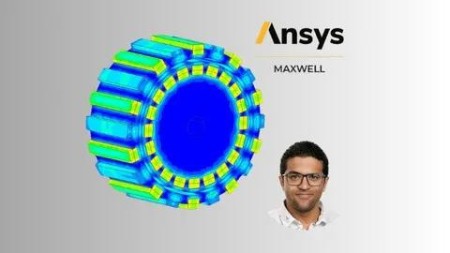
Ansys Maxwell Electromagnetic Design : Basics To Advanced
Published 5/2025
MP4 | Video: h264, 1920×1080 | Audio: AAC, 44.1 KHz
ANSYS MAXWELL, FEA, Electromagnetic Design, Magnets, Conductors, Ferromagnetic material, R&D, Research Experience
What you’ll learn
Build 3D electromagnetic models using cylindrical, arc, and rectangular geometries with precise material and boundary settings.
Simulate real-world magnet behavior including force, flux density, and field direction under static and transient conditions.
Design and analyze electromagnets with customizable coil configurations, core shapes, and current inputs to evaluate force output.
Use band definition to simulate motion such as rotational, translational and simple harmonic movement in motors, actuators, and generators.
Animate simulation results to visualize magnetic field evolution and rotating systems dynamically over time.
Bridge simulation with experimental data by comparing simulated results with real-world measurements, enabling design validation.
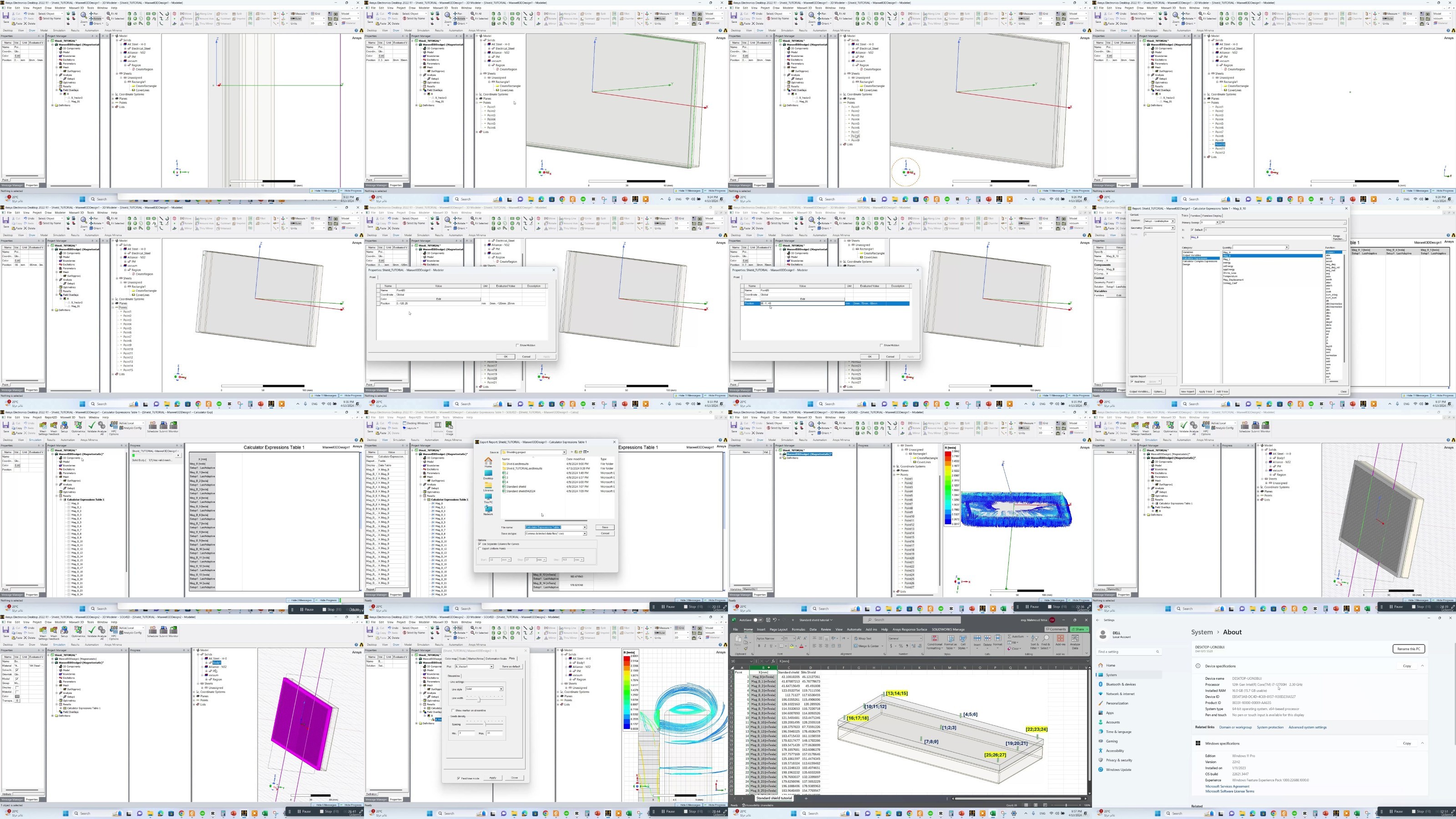
Real workshop for magnetic shield design and study effectivness of different shape of magnetic shields such as standard and slits shield
Requirements
Basic understanding of electromagnetics
No prior experience with ANSYS Maxwell required
Fundamentals of electrical circuits
Basic 3D geometry concepts
A computer with ANSYS Maxwell installed
Commitment to learning and practice
Description
Overview
Section 1: Introduction
Lecture 1 Welcome to this course and many thanks for joining
Lecture 2 Overview
Section 2: Cylindrical Magnet 3D Design
Lecture 3 Objectives
Lecture 4 Intro
Lecture 5 Overview of N35 Magnets
Lecture 6 Outlines: First steps in design process
Lecture 7 Cylindrical Magnet ( Geometry, Material and color definition)
Lecture 9 Outlines: Define Boundary & Mesh setting
Lecture 10 Cylindrical Magnet ( Boundary & Mesh setting Definition)
Lecture 11 Outlines: Add solution setup & Add optimetrices
Lecture 12 Cylindrical Magnet ( Add solution type & Add optimetrices )
Lecture 13 Outlines: Add results report, Specify planes for field density plot, Analyze all
Lecture 14 Cylindrical Magnet ( results, Field density and Flux lines Map)
Lecture 15 Simulation result
Lecture 16 Experimental Setup
Lecture 17 Comparison between simulation and experimental results
Lecture 18 Important definition
Lecture 19 Conclusions
Section 3: Attraction and repulsion between two symmetrical cylindrical magnets
Lecture 20 Objectives
Lecture 21 The Attraction and Repulsion Between Two Magnets
Lecture 24 Repulsion between two cylindrical magnets and comparison to Attraction case
Lecture 27 Conclusions
Section 4: Different Shapes of Permanent Magnets ( Rectangular & Ring & Arc )
Lecture 28 Objectives
Lecture 29 Introduction
Lecture 30 2D design of rectangular permanent magnet
Lecture 31 3D design of rectangular permanent magnet
Lecture 32 2D design of ring magnet
Lecture 33 3D design of ring Magnet
Lecture 34 2D design of arc magnets
Lecture 35 3D design of arc magnets
Lecture 36 Conclusions
Section 5: Conductor setup ( Line conductor and rectangular loop of conductor )
Lecture 37 Objectives
Lecture 38 Line conductor – DC current excitation – 3D magnetostatic analysis
Lecture 39 Rectangular loop of conductor – DC current excitation -3D magnetostatic analysis
Lecture 40 Line conductor – DC current excitation – 2D magnetostatic analysis
Lecture 41 Rectangular loop of conductor – DC current excitation -2D magnetostatic analysis
Lecture 42 Line conductor -AC current excitation – 2D transient analysis
Lecture 43 Add iron core to rectangular current loop -Magnetostatic analysis -DC excitation
Lecture 44 Conclusions
Section 6: Electromagnet design using rectangular current loop and iron core
Lecture 45 Objectives
Lecture 48 What if AC source is used instead of DC source?
Lecture 49 Understanding Faraday’s Law and Transformer Action
Lecture 50 Transformer action between two windings
Lecture 51 Conclusions
Section 7: Define band (Rotating motion, Translation motion and Simple Harmonic motion)
Lecture 52 Objectives
Lecture 53 Define rotating band for 3D arc magnets
Lecture 54 Induced voltage at loop terminals above rotating arc-shaped PMs
Lecture 55 Define translation motion
Lecture 56 What is simple harmonic motion ?
Lecture 57 Define Simple harmonic motion
Lecture 58 Conclusions
Section 8: Magnetic Shield Workshop ( Real Project )
Lecture 59 Objectives
Lecture 60 Introduction to Magnetic Shield Workshop
Lecture 64 Task : PM Sield for large cylindrical ring PM
Lecture 65 Conclusions
Section 9: Revision on some important Skills
Lecture 66 Create object from face & sweep it along vector & split function
Lecture 67 Exporting and Importing Geometry
Lecture 68 Design datasets and pwl function
Lecture 69 Create 3D model from existing 2D model
Lecture 70 Define Mesh setting : length based method
DDownload
https://www.keeplinks.org/p27/686193179db3c
RapidGator
https://www.keeplinks.org/p27/686193fa43fd5
NitroFlare
https://www.keeplinks.org/p27/686195989b645