


Architectural Lighting Visualization in After Effects
MP4 | Video: h264, 1920×1080 | Audio: AAC, 44.1 KHz, 2 Ch
AI-generated voice narration is used throughout this course. All technical instruction, demonstrations, project workflows, lighting design decisions, and educational content have been created, reviewed, and verified by the instructor. The workflow also includes AI-assisted visual tools such as Adobe Firefly.
Create architectural lighting presentations with Photoshop and After Effects
Turn a static architectural render into a day-to-night lighting presentation. In this practical, project-based course, you will follow an architectural lighting visualization workflow from Photoshop preparation to animated facade lighting and final presentation in Adobe After Effects.
The focus is architectural lighting visualization and professional project workflow. Basic familiarity with Photoshop and After Effects is recommended: this is an intermediate application course, not an introduction to the software interfaces or every menu and editing tool.
Follow the project from preparation to presentation
Begin with an overview of the complete workflow and a preview of the finished architectural lighting project. Then organize your project folder and prepare day and night visuals in Photoshop, including AI-assisted image editing where appropriate.
Prepare facade lighting elements on separate layers, work with architectural outlines, and export transparent assets for After Effects. Consider perspective, scale, placement, light, and shadow so that lighting products and effects fit naturally into the building image.
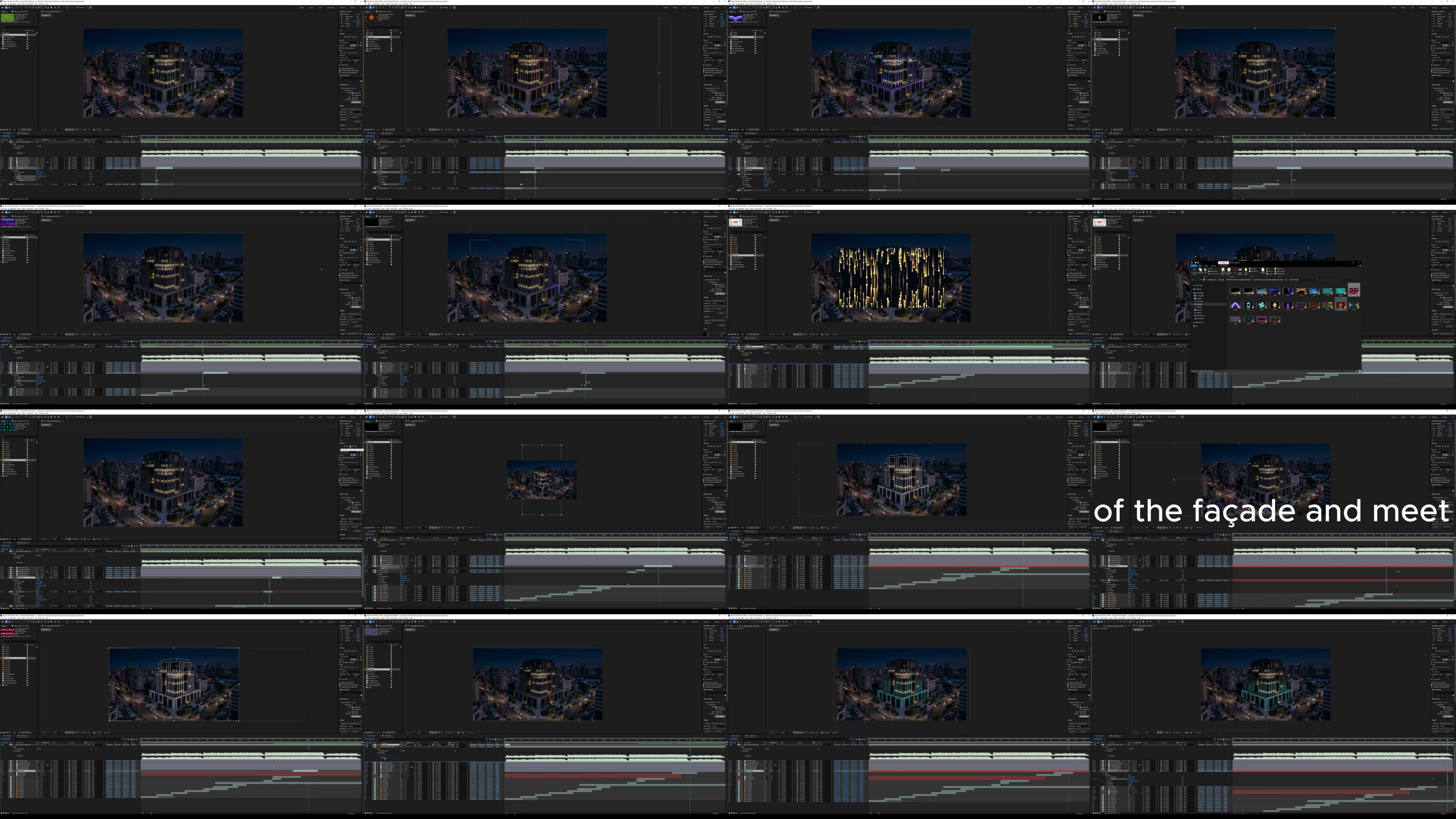
Next, bring the prepared assets into After Effects, organize the layers, and build a composition for RGB architectural lighting. Develop lighting scenarios and animate the presentation using keyframes, timing, and controlled transitions. Continue with music synchronization and finish with a professional opening cover for your architectural lighting presentation.
The broader project workflow also demonstrates presentation techniques such as cinematic camera movement, logo animation, transitions, and final video export. You will see how Photoshop preparation, After Effects animation, and lighting design decisions work together to communicate a visual concept.
Learn through a focused architectural project
This course contains approximately one hour of video across seven lessons. Two downloadable resources are included: a Photoshop project file and a ZIP archive of facade lighting project materials. Use the resources provided with the Photoshop lessons to follow the project and practice the workflow.
For a clear learning path, watch the project overview, view the finished result, and then work through the preparation and animation lessons in sequence. Pause and revisit individual steps as you apply the techniques to your own architectural visuals.
Who this course is for
Before you begin
You should be comfortable with basic software navigation and common editing operations in Photoshop and After Effects. Access to both applications is needed to follow the practical workflow. AI-assisted steps also require access to the relevant features demonstrated in the lessons. Software subscriptions are not included with this course.
By the end of the course, you will understand how to approach an architectural lighting visualization project from preparation to animation, and how to turn a static render into presentation material for portfolios, clients, architectural projects, and commercial work.

RapidGator
https://www.keeplinks.org/p27/6aa1c7e2b45df
DDownload
https://www.keeplinks.org/p27/6aa1c87265cd8
NitroFlare
https://www.keeplinks.org/p27/6aa1c95b5c75f