

Brain Computer Interfaces, Neural Engineering, NeuroRobotics
Published 3/2025
MP4 | Video: h264, 1280×720 | Audio: AAC, 44.1 KHz, 2 Ch
Fundamentals of Neural Recording, Neural Stimulation, and Closed-Loop Brain-Computer Interfaces for Robotic Applications
What you’ll learn
Learning objectives are listed categorically as software/hardware expertise, quantitative skills, critical thinking, biology knowledge, and scientific literacy
Software: filter noisy biological signals
Software: extract features from neuromuscular waveforms
Software: decode information from neural and electromyographic recordings
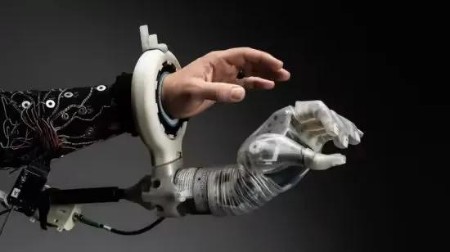
Software: control a robotic hand in real-time using biological recordings
Software: implement real-time bioinspired haptic feedback
Software: develop real-time functional electrical stimulation for assistive and rehabilitative tech
Hardware: describe the principles of safe and effective neurostimulation
Hardware: describe chemical reactions for electrically exciting neurons
Hardware: record electromyographic signals from the surface of the body
Quantitative: model neurons as electrical circuits
Quantitative: quantify ion and voltage changes during action potentials
Quantitative: quantify spatiotemporal changes in electrical activity throughout neurons
Quantitative: perform a safety analysis of neurostimulation
Quantitative: measure how changes in neuron morphology (e.g., length, diameter) impact spatiotemporal changes in electrical activity
Quantitative: measure how changes in neuron electrical properties (e.g., capacitance, resistance) impact spatiotemporal changes in electrical activity
Critical Thinking: explain the characteristics of good training data for neural engineering applications
Critical Thinking: evaluate the performance of a motor-decode algorithm
Critical Thinking: interpret physiological responses to neurostimulation
Critical Thinking: debug common neurostimulation errors
Critical Thinking: debug common electrophysiology errors
Critical Thinking: develop novel neuromodulation applications
Critical Thinking: critically evaluate brain-computer interface technology
Biology: list several applications of neural engineering
Biology: identify potential diseases suitable for next-generation neuromodulation applications
Biology: draw and explain how biological neural networks transmit information and perform complex tasks
Biology: describe the molecular basis of action potentials
Biology: summarize the pathway from motor intent to physical movement
Biology: explain the neural code for motor actions
Biology: describe how biological neural networks encode sensory information
Scientific Literacy: summarize the state of the neural engineering field
Scientific Literacy: identify future research challenges in the field of neural engineering
Scientific Literacy: cite relevant neural engineering manuscripts
Scientific Literacy: write 4-page conference proceedings in IEEE format
Scientific Literacy: use a reference manager
Scientific Literacy: performance basic statistical analyses
Requirements
There are no requirements for this course.
This course contains OPTIONAL labs that benefit from a background in programming. However, since these labs are optional, programming experience is not required.
Description
Who this course is for
Individuals interested in working in the field of brain-computer interfaces, neural engineering, or neurorobotics
Students and individuals interested in learning about the upcoming field of brain-computer interfaces
Teachers interested in adding curriculum to their institution in the field of neural engineering & neurorobotics
Investors interested in understanding basic concepts necessary to confidentially invest in neurotech companies such as Elon Musk’s Neuralink
Homepage
https://www.udemy.com/course/neurorobotics/
