

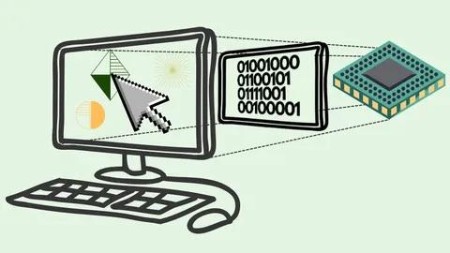
Computer Organization And Assembly Language
Published 2/2025
MP4 | Video: h264, 1920×1080 | Audio: AAC, 44.1 KHz
Learn assembly language and its role in turning your code into a safe, optimized running application
What you’ll learn
Write and understand x86 32bits assembly languge (Core Intel 80386 Instruction Set) and more
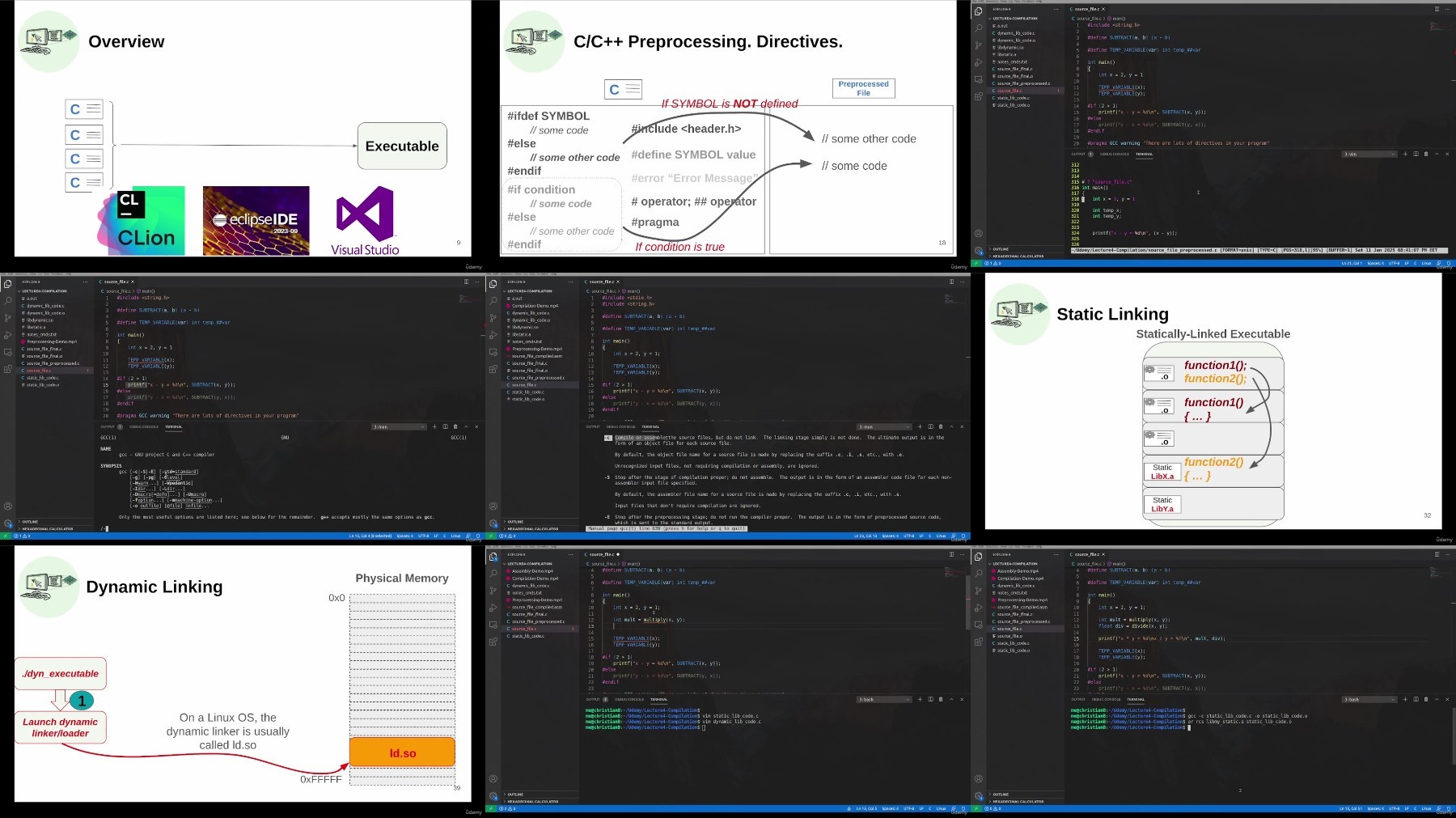
Understand the build process behind GCC compiler – preprocessing, compilation, assembly, linking
Manually generate executables from projects containing source files, object files and libraries
Understand what happens at runtime (when application is launched into execution) – loader, shared libraries, process address space
Understand how hardware resources are used by a running process – CPU, registers, RAM, cache
Master debugging a program using extensions of GDB debugger
Reverse-engineer a binary using both static and dynamic analysis tools (objdump, Ghidra, GDB peda)
Exploit or protect against some of the most popular code vulnerabilities: buffer overflow
Understand and use mechanisms of protection against exploits (ASLR, Stack Smashing Protection, Data Execution Prevention)
Requirements
Computer (x86_64 architecture recommended)
Basic C programming knowledge would be helpful, but not mandatory
Being accustomed with the Linux operating system would be helpful, but I will walk you through everything you need – virtual machine, terminal, VSCode
Description
Overview
Section 1: Introduction
Lecture 1 Introduction
Lecture 2 The Big Picture
Lecture 3 Setting Up Your Environment
Section 2: CPU and Memory
Lecture 4 CPU and Memory
Section 3: High-Level Programming Notions
Lecture 5 Data and Data Types
Section 4: Compilation Steps
Lecture 7 Compilation Steps
Section 5: Process and Program Memory
Lecture 8 Process and Program Memory
Section 6: Registers in Assembly
Lecture 9 Registers in Assembly
Section 8: GDB Debugging
Lecture 11 GDB Debugging – Demo
Section 9: Basic x86 Assembly Instructions
Lecture 12 Arithmetic and Logical Instructions
Lecture 13 Data Movement Instructions
Lecture 14 Control Transfer Instructions
Lecture 15 Basic Instructions – Demo
Section 10: The Stack
Lecture 16 The Stack
Lecture 17 Function Calling in Assembly
Section 11: Security
Lecture 18 Buffer Overflow
Lecture 19 Binary Analysis. Ghidra
Absolute beginners in programming that want to understand how the whole system works – from a piece of code to bits on the CPU – and how higher-level languages manage to do it all,Anyone interested in security and wants an introduction into reverse-engineering, exploits and protection mechanisms,Anyone with a special interest towards low-level programming – operating systems, embedded systems, drivers,Programmers at any level who just want a deeper understanding of the underlying mechanisms of the language they are using
AusFile
https://www.keeplinks.org/p27/67e3144409813
RapidGator
https://www.keeplinks.org/p27/67e3151a964b6
TurboBit
https://www.keeplinks.org/p27/67e316a353e8c
FileFactory