


Design Patterns in C# and .NET
Last updated 3/2022
Duration: 20h22m | .MP4 1280×720, 30 fps(r) | AAC, 44100 Hz, 2ch | 4.77 GB
Discover the modern implementation of design patterns with C# and .NET
What you’ll learn
Recognize and apply design patterns
Refactor existing designs to use design patterns
Reason about applicability and usability of design patterns
Requirements
Good understanding of C#
Familiarity with latest C# features
Good understanding of object-oriented design principles
Description
Course Overview
This course provides a comprehensive overview of
Design Patterns in C# and .NET
The latest versions of C# and the .NET framework
Use of modern programming approaches: dependency injection, reactive programming and more
Use of modern developer tools such as ReSharper
What are Design Patterns?
Design Patterns are reusable solutions to common programming problems. They were popularized with the 1994 book
Design Patterns: Elements of Reusable Object-Oriented Software
by
Erich Gamma, John Vlissides, Ralph Johnson and Richard Helm
(who are commonly known as a Gang of Four, hence the GoF acronym).
The original book was written using C++ and Smalltalk as examples, but since then, design patterns have been adapted to every programming language imaginable: C#, Java, PHP and even programming languages that aren’t strictly object-oriented, such as JavaScript.
The appeal of design patterns is immortal: we see them in libraries, some of them are intrinsic in programming languages, and you probably use them on a daily basis even if you don’t realize they are there.
What Patterns Does This Course Cover?
This course covers
all
the GoF design patterns. In fact, here’s the full list of what is covered:
SOLID Design Principles
: Single Responsibility Principle, Open-Closed Principle, Liskov Substitution Principle, Interface Segregation Principle and Dependency Inversion Principle
Creational Design Patterns
: Builder, Factories (Factory Method and Abstract Factory), Prototype and Singleton
Structrural Design Patterns
: Adapter, Bridge, Composite, Decorator, Façade, Flyweight and Proxy
Behavioral Design Patterns
: Chain of Responsibility, Command, Interpreter, Iterator, Mediator, Memento, Null Object, Observer, State, Strategy, Template Method and Visitor
Who Is the Course For?
Presentation Style
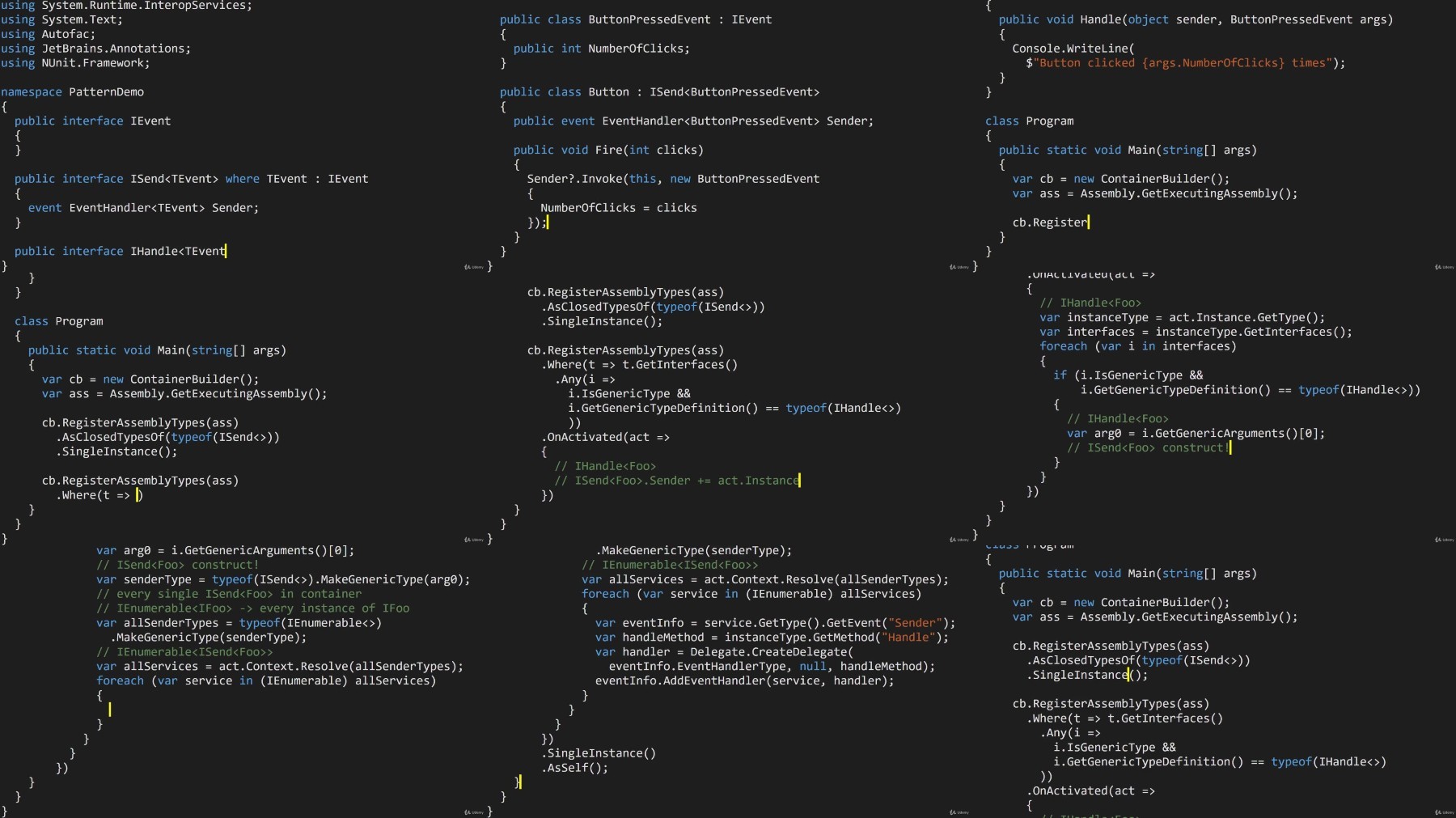
This course is presented as a (very large) series of live demonstrations being done in Microsoft Visual Studio. Most demos are single-file, so you can download the file attached to the lesson and run it in Visual Studio, Visual Studio Code, Rider or another IDE of your choice.
Who this course is for:
Beginner and experienced developers
Anyone interested in design patterns
RapidGator
https://www.keeplinks.org/p27/68cdad7905c4c
NitroFlare
https://www.keeplinks.org/p27/68cdaf7e7e29a
DDownload
https://www.keeplinks.org/p27/68cdb10186665