Dpa : Data Processing And Analysis Vnsgu Sem1
Published 11/2024
MP4 | Video: h264, 1920×1080 | Audio: AAC, 44.1 KHz
VNSGU BCA Sem 1: Data Processing and Analysis – DPA
What you’ll learn
Fundamentals of Workbook and Spreadsheet
Concepts of workbook, adding worksheet rename sheet
Insert, delete, column, rows, cells
Format Cells, cell address, formula bar
Format Page Insert Header & Footer
Split, Hide and freeze panes in worksheet.
Functions Power, Sqrt, Abs, Floor, Celling, Int, Trunc, Round, sum, average, count, max, min, sumif, pmt, stddev, if, AND, OR, NOT,
Sort Data, Filter Data, Conditional Formatting, Cell validation,
Introduction of DBMS, Database characteristics
Data Independence ( Logical and Physical), Components of Database , Components of Database
Database Models ( Hierarchical, Network, E/R, Relational)
Schema and Instance, Entity, Relationship, Attribute, Types of Attribute
E/R Diagram, Aggregation,
Mapping Cardinalates: One to one, one to many , many to one, many to many Mapping
Super key, candidate key, Primary key, Composite key, Unique key, Foreign key
Need of normalization ( Insertion, Updating, Deletion anomalies)
Functional Dependency, Armstrong Axioms, Closure of a set of FD
Prime and Non-prime Attribute
1st Normal Form, 2nd Normal Form, 3rd Normal Form
Concepts of Structure Query Language (SQL)
DDL Statements : Create , Drop, Truncate, Rename, Alter
DML Statements : Insert, Update, Delete
DQL(Data Query Language) Statements : select
Constraints ( Table level and Attribute Level), NOT NULL, CHECK, DEFAULT, UNIQUE, Primary Key, Foreign Key, On Delete Cascade
Using where clause and operators with where clause: In, between , like, not in, =, !=, >, =, <=, wildcard operators, AND, OR operators
Order by, Distinct, Exists and not Exists, Use of Alias
Aggregate Functions: avg(), max(), min(), sum(), count(), Group by, Having
Scalar Functions: ucase(), lcase(), round(), mid().
Creating sequence, Creating simple view, updating view, dropping view, Difference between View and Table.
Requirements
Basic knowledge of computer , No programming knowledge require you learn about calc, database and sql in this course
Description
Overview
Section 1: Concept of Worksheet
Lecture 1 Fundamentals of Workbook and Spreadsheet
Lecture 2 Concepts of workbook, adding worksheet rename sheet
Lecture 3 Insert, delete, column, rows, cells, cell size ( height, width)
Lecture 4 Cell address, formula bar
Lecture 5 Cut, copy, paste, paste special, format painte
Lecture 6 Format Cells
Lecture 7 Insert picture, shapes, textbox
Lecture 8 Format Page Insert Header & Footer
Lecture 9 Save, save as, save file as csv, protect sheet and Workbook
Lecture 10 Print, Quick print, Print preview
Lecture 11 Split and freeze panes in worksheet.
Lecture 13 Functions Power, Sqrt, Abs, Floor, Celling, Int, Trunc, Round
Lecture 14 Functions sum, average, count, max, min, sumif, pmt, stddev
Lecture 15 Logical ( if, AND, OR, NOT )
Lecture 16 Date and Time functions
Lecture 17 Sort Data, Filter Data
Lecture 18 Conditional Formatting
Lecture 19 Cell Validation
Lecture 20 Subtotal
Lecture 21 Text to columns, Remove Duplication
Section 3: Concepts of Database
Lecture 22 Introduction of DBMS
Lecture 23 Database characteristics
Lecture 24 Data Independence ( Logical and Physical)
Lecture 25 Users of DBMS
Lecture 26 DBA
Lecture 27 Components of Database
Lecture 28 Database Architecture (1-tier, 2-tier, 3-tier)
Lecture 29 Database Models ( Hierarchical, Network, E/R, Relational)
Lecture 30 Schema and Instance
Lecture 31 Entity, Relationship, Attribute
Lecture 32 Types of Attribute
Lecture 33 E/R Diagram
Lecture 34 Aggregation
Lecture 35 Mapping Cardinalates : One to one, one to many , many to one, many to many
Lecture 37 Weak entity set
Lecture 38 Types of Relationship
Lecture 39 Super key, candidate key, Primary key, Composite key, Unique key.
Lecture 40 Foreign key
Section 4: Normalization and Concepts of SQL
Lecture 41 Need of normalization ( Insertion, Updating, Deletion anomalies)
Lecture 42 Functional Dependency
Lecture 43 Armstrong Axioms
Lecture 44 Clouser of a set of FD
Lecture 45 Prime and Non-prime Attribute
Lecture 46 1st Normal Form, 2nd Normal Form, 3rd Normal Form
Lecture 47 BCNF
Lecture 48 Concepts of Structure Query Language (SQL)
Lecture 49 SQL datatypes
Lecture 50 DDL Statements : Create , Drop, Truncate, Rename, Alter Syntax
Lecture 51 DDL Statements : Create , Drop, Truncate, Rename, Alter Practical
Lecture 52 DML Statements : Insert, Update, Delete Syntax
Lecture 53 DML Statements : Insert, Update, Delete Practical
Lecture 54 DQL(Data Query Language) Statements : select Syntax
Lecture 55 DQL(Data Query Language) Statements : select Practical
Section 5: Queries (Single Table only)
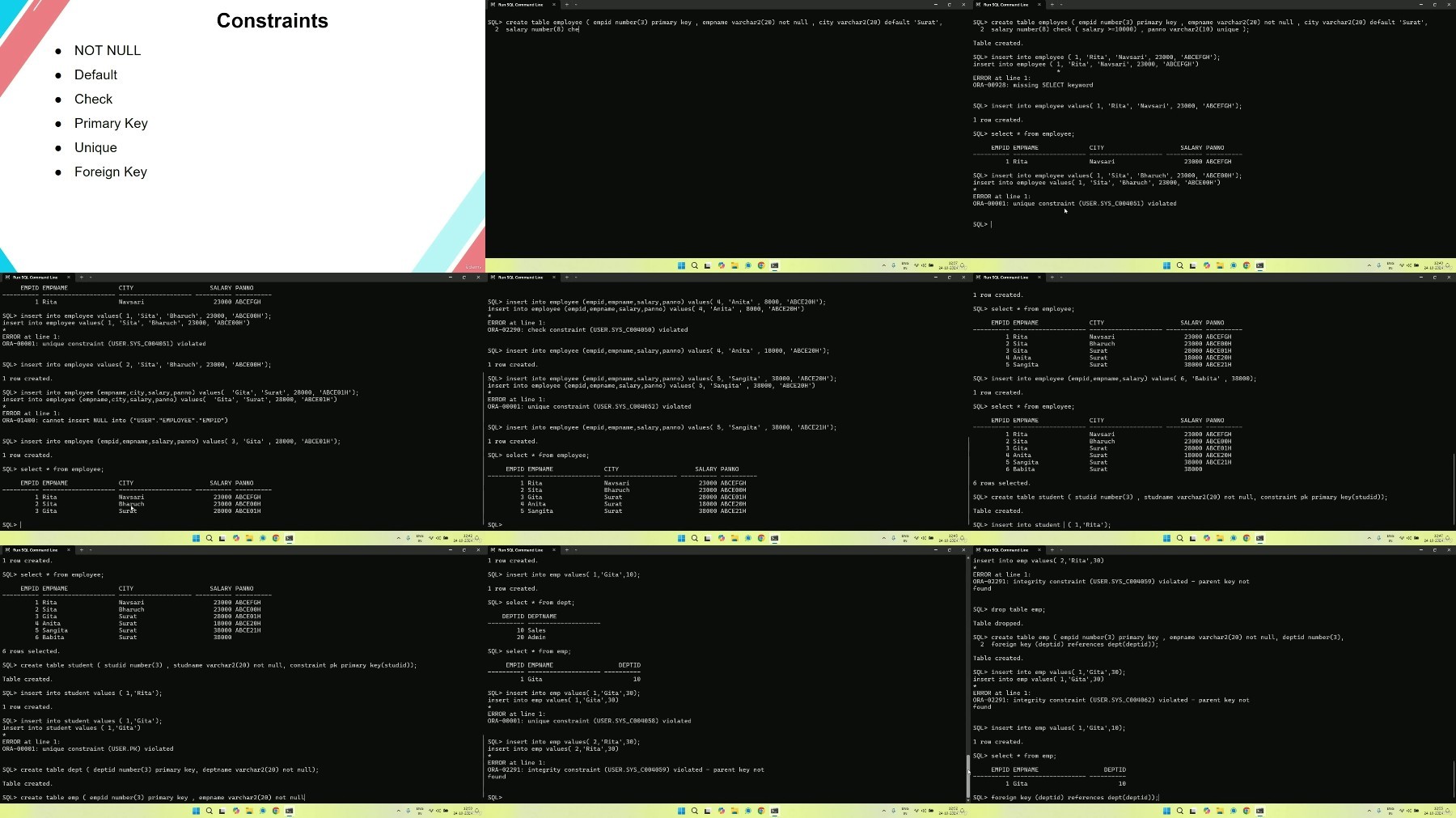
Lecture 56 Constraints NOT NULL, CHECK, DEFAULT, UNIQUE, Primary Key, Foreign Key
Lecture 57 Where clause and operators (In, between, like, not, wildcard operators, and, or)
Lecture 58 Order by, Distinct
Lecture 59 Exists and not Exists
Lecture 60 Use of Alias
Lecture 61 Aggregate Functions: avg(), max(), min(), sum(), count(), Group by, Having.
Lecture 62 Scalar Functions: upper(), lower(), substr(), round(), floor().ceil(), trunc()
Lecture 63 Using Date Datatype and Functions
Lecture 64 Sequence
Lecture 65 Views
VNSGU BCA SEM1 Student for Subject Data Processing and Analysis