


Published 5/2025
MP4 | Video: h264, 1920×1080 | Audio: AAC, 44.1 KHz
Clear, Confident, Scenario Based Communication Hacks for Every Interaction in Customer Service for Every Situation
What you’ll learn
Ask clear, concise questions to gather relevant information, verify customer data, and ensure accurate follow-up.
Handle difficult situations and upset customers with empathy, using appropriate language to de-escalate tensions and resolve issues.
Write professional and customer-friendly emails and messages that align with customer service expectations and communication best practices.
Use empathetic and respectful language when addressing customer misunderstandings or customer-caused issues.
Requirements
No prior customer service experience required, though it will be beneficial.
Access to a computer or mobile device with internet for course materials and communication exercises.
Description
Overview
Lecture 1 Course Introduction
Lecture 3 Acquiring Preliminary Data
Lecture 4 Best Practice for Account Verification
Lecture 5 Discerning The Purpose of Customer Contact
Lecture 6 Asking When Incidents Occured
Lecture 7 Qualitative and Quantitative Questions
Lecture 8 Confirming Infromation
Lecture 9 How to Ask Sensitive Questions
Lecture 10 Terminology for Service Explanations
Lecture 11 Proactive Response Strategies for Addressing Customer Queries
Lecture 12 Upselling Tips
Lecture 14 Confirming After Task Completion
Lecture 15 Tips for Basic Troubleshooting
Section 5: The Secrets of Bridging Communication Gap
Lecture 16 Identifying and Understanding Communication Gaps
Lecture 17 Communication Best Practices
Lecture 18 Soliciting Repeats for Clarity
Lecture 19 Verifying Received Information
Lecture 20 Confirming Key Customer Details
Section 6: Dealing Upset Customers
Lecture 21 Techniques to De-escalate Tensions
Lecture 22 Empathy in Action: A Guided Approach
Lecture 23 Solution Provisioning: Real-world Strategies
Section 7: Efficiently Managing Customer Hold Time
Lecture 24 Affirmative Language for Hold Times
Lecture 25 How to Initiate and Conclude Hold Periods – Best Tips
Lecture 26 What to Say While Transferring Calls?
Section 8: Specialist Referrals: When and How
Lecture 27 Criteria for Specialist Referral in Customer Service
Section 9: Clarifying Misconceptions
Lecture 29 Tactful Correction Techniques
Lecture 30 Clearing Up Service Feature Misunderstandings
Lecture 31 The Importance of Active Listening
Section 10: Addressing Customer-Induced Issues
Lecture 33 Demonstrating a Willingness to Assist
Section 11: Policy Exceptions: Balancing Rules and Customer Loyalty
Lecture 34 Criteria for Making Exceptions
Lecture 35 Verbal Techniques for Communicating Exceptions
Lecture 36 Measuring the Impact on Customer Loyalty
Lecture 37 Comprehensive Issue Resolution: A Checklist
Lecture 38 Closing Phrases
Lecture 39 How to Mention the Post-Interaction Surveys
Lecture 40 Proper Protocols for Ending the Call
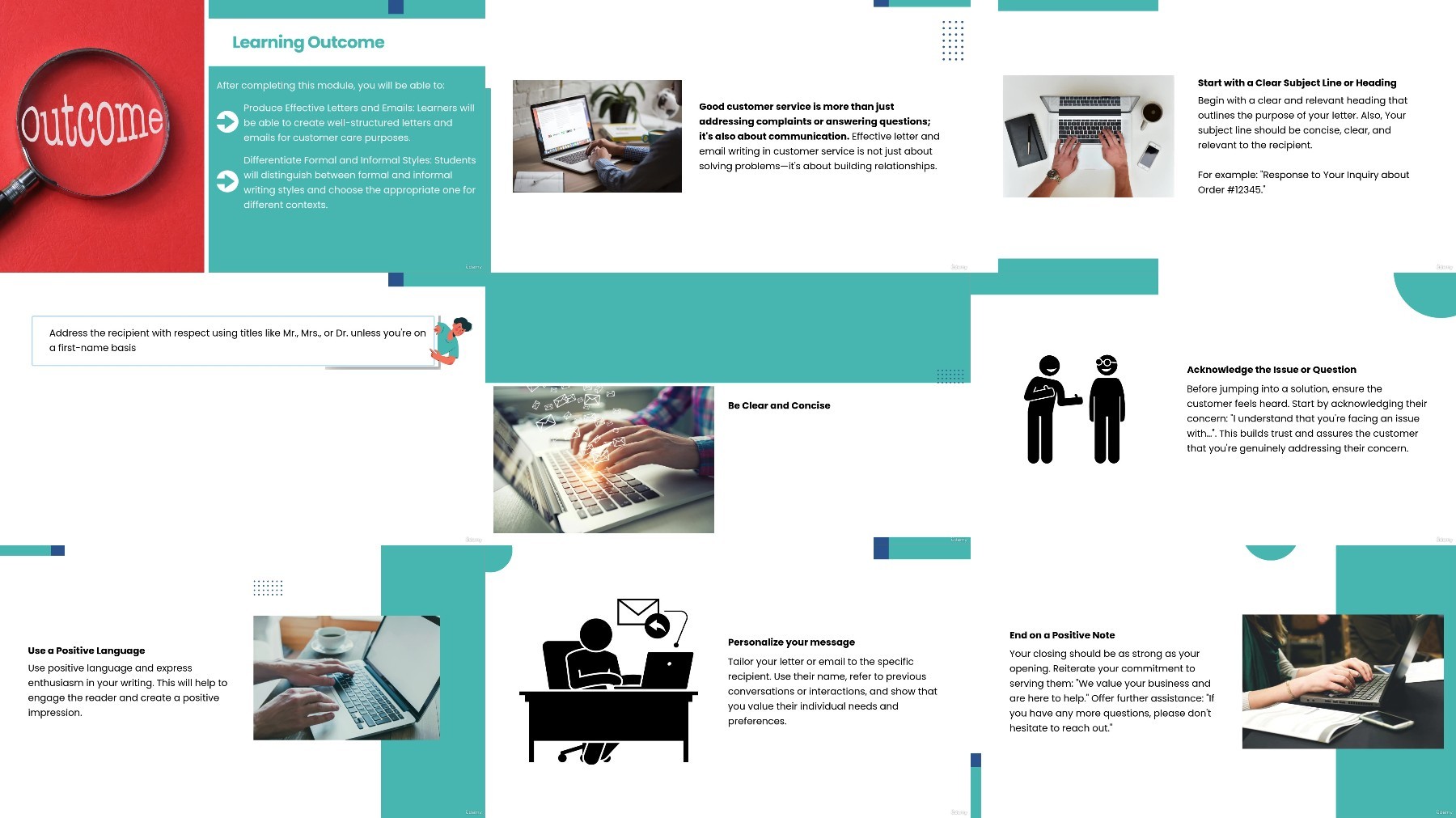
Lecture 41 Effective Letters and Email Writing Techniques
Lecture 42 Formal and Informal Writing Styles
Lecture 43 The Five Cs of Customer Care Writing
RapidGator
https://www.keeplinks.org/p27/68456302e0c6e
NitroFlare
DDownload
https://www.keeplinks.org/p27/684563c6cc95f