Fundamentals Of Software Architecture – A Developer’S Guide
Published 10/2024
MP4 | Video: h264, 1920×1080 | Audio: AAC, 44.1 KHz
Learn software architecture principles, patterns, and practices to transition from developer to architect.
What you’ll learn
Learn how to transition from a developer to a software architect, mastering the key skills and responsibilities of the architect role.
Discover how to align technical decisions with business goals, ensuring that software architectures support both scalability and maintainability.
Apply architecture principles to real-world scenarios, covering data flow, communication styles, and integration of software components into complete systems.
Requirements
Willingness to dive deep into software architecture concepts and patterns.
Experience in software development and designing systems.
Understanding of coding practices and system design principles.
Description
Overview
Section 1: Introduction
Lecture 1 Introduction
Section 2: Evolving from Developer to Architect
Lecture 2 Understanding the Roles and Responsibilities
Lecture 3 Evolving Skill Sets and Mindsets
Lecture 4 Decision-Making, Stakeholders, and Challenges
Section 3: It’s All About Patterns
Lecture 5 Introduction of a Software Architect Mindset
Lecture 6 Overview of Architectural Patterns
Lecture 7 Trade-offs in Choosing a Software Pattern
Section 4: The Roles of a Software Architect
Lecture 8 Understanding Business Domains and Stakeholders
Lecture 9 Defining the Solution Architecture
Lecture 10 Balancing Constraints and Making Trade-offs
Lecture 11 Working Across Project Layers
Section 5: Deep Dive into Architectural Styles
Lecture 12 Monolithic Architecture
Lecture 13 Layered Architecture
Lecture 14 Microservices Architecture
Lecture 15 Micro Frontend Architecture
Lecture 16 Event-Driven Architecture
Lecture 17 Serverless Architecture
Section 6: Architecture Characteristics
Lecture 18 Architectural Components, Decomposition, and Building Blocks
Lecture 19 Communication Styles: Synchronous vs. Asynchronous
Lecture 20 Data and Database Models
Lecture 21 Functional and Non-Functional Requirements
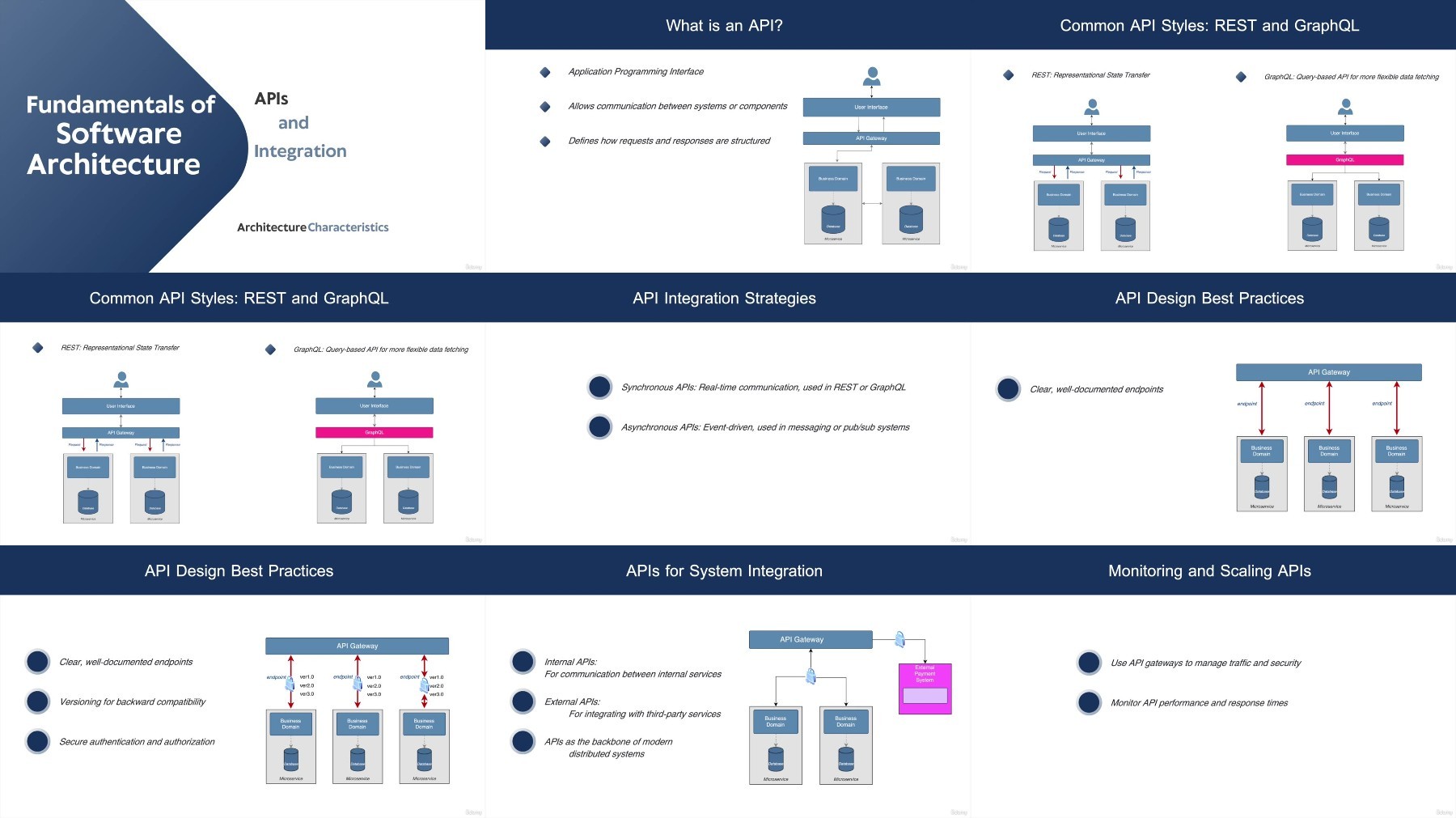
Lecture 22 APIs and Integration
Section 7: Bridging Business and Architecture
Lecture 23 Understanding the Business Domain and Event Storming
Lecture 24 Domain-Driven Design (DDD)
Lecture 25 Strategic Design in DDD: Bounded Contexts and Context Mapping
Lecture 26 Component Discovery and Decomposition
Lecture 27 The C4 Model for Visualizing Architecture
Lecture 28 Tech Stack Alignment with Business Goals
Lecture 29 From Business Goals to Architecture: Bridging the Gap
Section 8: Real-World Application of Software Architecture Principles
Lecture 30 Introduction
Lecture 31 Understanding the Business Context and Requirements
Lecture 32 Mapping Business Requirements to Domain Functionality
Lecture 33 Component Discovery and Defining Software Boundaries
Lecture 34 Exploring Trade-offs in Architectural Decisions
Lecture 35 Designing Communication and Data Flow
Lecture 36 Defining Databases and Data Storage Strategy
Lecture 37 Integrating Components into a Complete Software Architecture
Section 9: Conclusion
Lecture 38 Conclusion
Software developers aiming to transition into a software architect role.,Developers seeking to enhance their knowledge of software architecture patterns.,Engineers looking to align technical decisions with business goals and scalability needs.,Professionals ready to apply architectural principles to real-world software systems.