

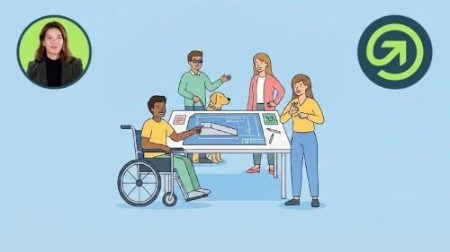
Inclusive Event Planning: Accessible In-Person & Hybrid
Last updated 1/2026
Duration: 1h 29m | .MP4 1920×1080 30fps(r) | AAC, 44100Hz, 2ch | 2.68 GB
Plan accessible, inclusive in‑person, hybrid, and virtual events-venues, content, comms, catering, and compliance.
What you’ll learn
– Use Universal Design to plan inclusive events across formats
– Audit venues for physical, sensory, and cognitive accessibility needs
– Build accessible hybrid/virtual events with captions, WCAG-ready platforms, and recordings
– Create inclusive programming with diverse speakers and accessible presentation standards
– Plan inclusive catering and cultural/sensory supports (quiet rooms, prayer spaces, labels)
– Communicate accommodations clearly in marketing, registration, signage, and staff scripts
Requirements
– There are no pre-requisites for this course
Description
Have you ever walked into an event and instantly felt like youdidn’t belong? For many attendees, that feeling comes from avoidable barriers-unclear communication, inaccessible venues, non-inclusive content, or digital platforms that don’t work with assistive technology.
And the expectations are rising fast. Studies show that87% of attendeesconsider diversity and inclusion important when deciding whether to attend an event. Inclusion is no longer a “nice to have”-it’s a strategic advantage and, in many regions, a legal requirement.
That’s exactly what this course will teach you.
In this practical, step-by-step course on Inclusive Event Planning, you’ll learn how to design events using Universal Design principles and how to build accessibility into every stage of the attendee journey-from registration to post-event follow-up.
In this course, you’ll learn how to:
– Apply Universal Design to prevent barriers before they appear
– Plan for physical, sensory, and cognitive accessibility (not just ramps)
– Select and audit accessible venues, routes, seating, signage, and amenities
– Build sensory supports like quiet rooms and low-stimulation spaces
– Make hybrid and virtual events accessible with captions, interpreters, and WCAG-aligned platforms
– Create inclusive content with diverse speaker lineups, accessible slides, and flexible session formats
– Communicate inclusion clearly through marketing, registration, staff training, and accessibility pages
– Understand baseline compliance expectations (e.g., ADA, Equality Act, and WCAG)
– Learn from real-world examples and a case study (BNA Festival of Neuroscience)
By the end of this course, you’ll have a clear framework and a practical checklist-driven approach to plan events thatwelcomemore people,reduce risk, strengthenengagement, and reflect your organization’svalues-without relying on last-minute accommodations.
Whether you’re organizing a conference, internal training, offsite, fundraiser, or community event, this course will help you design experiences where people don’t just attend-they belong.
Who this course is for:
– Event planners and event coordinators
– HR, People Ops, and DEI/DEIB professionals supporting employee events
– Internal communications and employee engagement teams
– Learning & Development (L&D) teams running trainings and workshops
– Marketing teams producing conferences, launches, and brand events
– Nonprofit and community organizers hosting public events
– Conference producers managing hybrid and virtual programs
More Info

DDownload
https://www.keeplinks.org/p27/698e51569e6f3
RapidGator
https://www.keeplinks.org/p27/698e51ffae672
NitroFlare
https://www.keeplinks.org/p27/698e52deb3123