


Learn System Verilog for Verification
Published 1/2026
Duration: 3h 18m | .MP4 1920×1080 30fps(r) | AAC, 44100Hz, 2ch | 1.32 GB
Learn System Verilog for Design and Verification with lots of hands on exercises
What you’ll learn
– Understand and Apply SystemVerilog Syntax and Constructs- Learners will be able to write syntactically correct SystemVerilog code with all its constrcuts.
– Design and Simulate Digital Circuits Using SystemVerilog and industry-standard simulation tools (e.g., ModelSim, QuestaSim).
– Implement Testbenches Using Object-Oriented Programming (OOP) Features
– Build and Use Constrained Random Testbenches and Functional Coverage Models
– Lots of Hands On Coding Exercise will give confidence to students.
Requirements
– Basic Knowledge of Digital Electronics like logic gates, multiplexers, flip-flops, finite state machines (FSMs), etc.
– Basic Understanding of Hardware Description Languages (HDLs) (Optional but helpful)
– HARDWORK, PASSION, DEDICATION
Description
Learn all the concepts of System Verilog in depth with lots of hands on programs and quizzes. Also create a project in System Verilog utilizing different verification constructs and concepts.
Why System Verilog – What is the need for system verilog and what were all the challenges before System verilog standard and how system verilog solved them
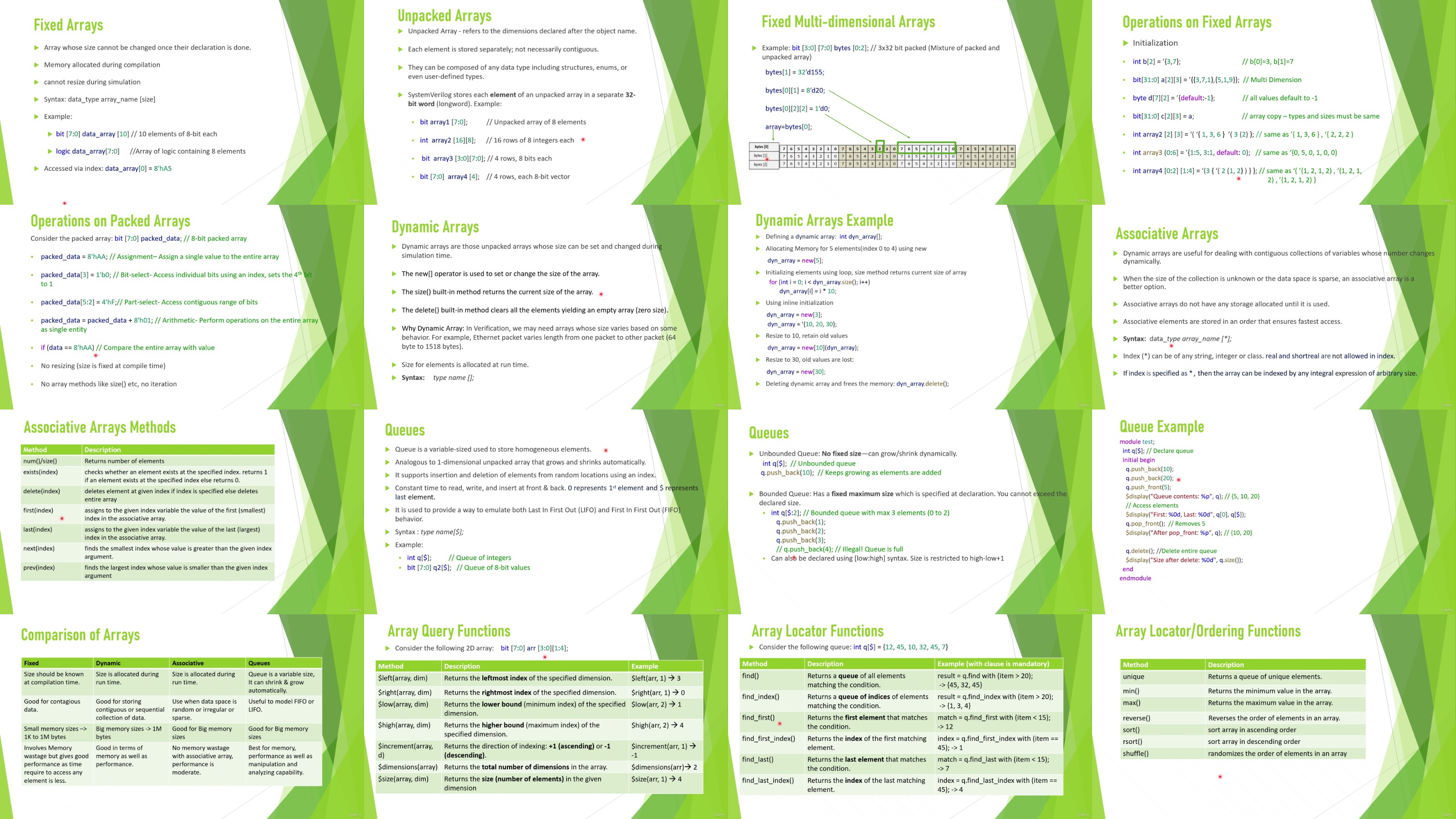
Data Types and constructs – Different data type and constructs which were added in the system verilog which eases out development and development of complex verification environments faster
Threads / Inter-process communication/synchronization – New constructs like Semaphore, Mailbox, Events which got added for inter process communication and how to use them efficiently
Classes and Randomization – Object oriented programming concepts to write extendable and maintainable testbenches along with randomization support for faster verification closure.
Interfaces – Support for faster RTL/testbench development using interfaces/modports – Write less code and do more
Coverage – How to make sure we are done with verification of Chip – Write & measure coverage.
Assertions – Write checks closure to design
Program Block – Avoid races using Program blocks
Clocking Block – Avoid races in design and testbench using clocking blocks
DPI (Direct Programming Interface) – Interface System verilog with C and other languages using System verilog DPI
Project
Design a synchronous FIFO with System verilog and create verification environment using advance features of system verilog like Queues, Classes, Randomization interface, coverage etc.
Who this course is for:
– Students doing Bachelor or Master in Engineering from Electronics / VLSI students /Micro-electronics
– Electronics/VLSI faculty looking to learn System Verilog or Teachers who have interest in VLSI domain
– Working Professionals such as Verification engineers, Design engineers, DFT/Backend engineers looking for domain change
More Info

DDownload
https://www.keeplinks.org/p27/698e00a4774c2
RapidGator
https://www.keeplinks.org/p27/698e00e9d7363
NitroFlare
https://www.keeplinks.org/p27/698e01712b586