


Master Linux Admin For Devops & Sre: Become Job-Ready
Published 3/2025
MP4 | Video: h264, 1920×1080 | Audio: AAC, 44.1 KHz
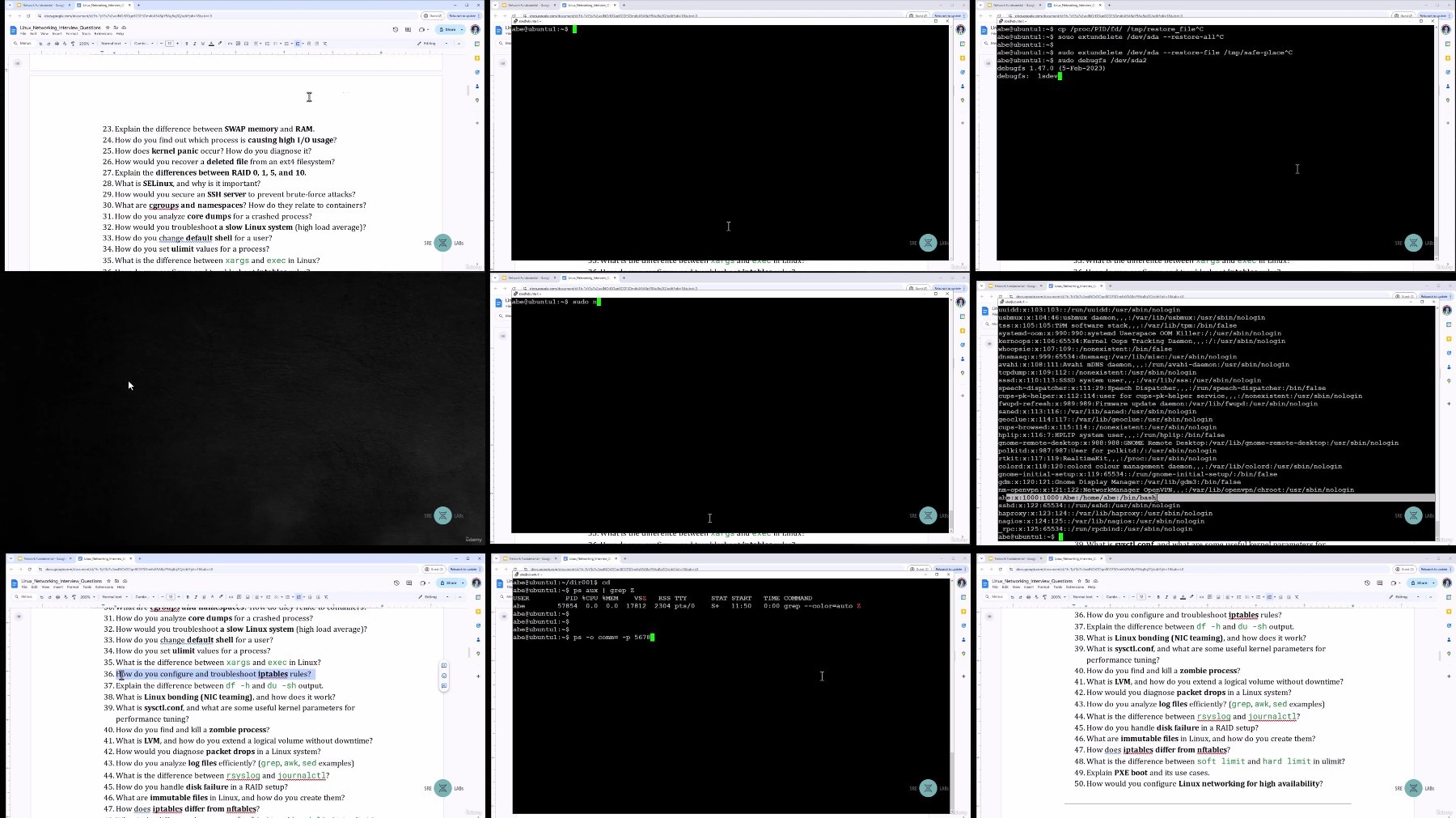
Master Linux Admin for DevOps & SRE (2025) | Hands-On System Administration, Bash Scripting & Networking
What you’ll learn
Master Linux Administration – Learn essential Linux skills for system administration, including file management, user permissions, networking, and automation.
Prepare for DevOps & SRE Roles – Gain hands-on experience with Linux fundamentals required for Site Reliability Engineering (SRE) and DevOps careers.
Enhance Your Command-Line & Scripting Skills – Become proficient in Linux CLI commands, shell scripting, and process management to automate tasks efficiently.
Crush Your Tech Interviews – Get interview-ready with real-world Linux & Networking Q&A, troubleshooting exercises, and hands-on challenges designed to help you
Understand Linux Networking & Security – Learn how to configure network interfaces, firewalls, security settings, and troubleshoot system performance issues.
Optimize Linux for High Performance – Master resource management, ulimit, sysctl tuning, and system debugging to ensure maximum efficiency.
Become Job-Ready for SRE & DevOps – Get a strong foundation in Linux, Networking, and troubleshooting to land your first job or advance your career.
Requirements
No prior Linux or DevOps experience is required! This course is designed for beginners and intermediate learners looking to master Linux for SRE, DevOps, and tech interviews.
A computer (Windows, macOS, or Linux) – You’ll need a system where you can install and use Linux (or a virtual machine).
Basic computer skills – You should be comfortable using a computer, browsing the internet, and installing software.
A willingness to learn – This course is hands-on and practical, so come ready to practice, experiment, and improve your skills!
Description
Overview
Section 1: Linux Fundamentals
Lecture 1 Introduction
Lecture 2 Linux Fundamentals: What You Need to Know
Lecture 3 The History of Linux: From Unix to Today
Lecture 4 How Linux is Used in the Real World
Lecture 5 The GNU Project & Open Source Revolution
Lecture 6 What Happens When You Press the Power Button?
Lecture 7 PID 1 & The First Process in Linux
Lecture 8 Parent & Child Processes: Who Runs What?
Lecture 9 Installing Linux: Step-by-Step Demo
Lecture 10 Setting Up Nginx on Linux: Quick Guide
Lecture 12 Text Mode vs. Graphical Mode in Linux
Lecture 13 Systemd vs. SysV Init: The Big Debate
Lecture 14 Mastering Systemd: Managing Services in Linux
Lecture 15 Hang in there!
Lecture 16 User Management in Linux: Adding & Controlling Users
Lecture 17 Linux Group Management: Organizing Users Effectively
Lecture 18 File Permissions in Linux: Who Can Access What?
Lecture 19 Ownership & Permissions: Securing Your Files
Lecture 20 Mastering sudo: Running Commands as Root
Lecture 21 Introduction to Linux Filesystems: How Data is Stored
Lecture 23 Mounting Drives in Linux: How It Works
Lecture 24 Fstab & Permanent Mounting: Automating Drive Mounts
Lecture 25 Filesystem Hierarchy (FHS): Understanding Linux Directories
Lecture 28 Understanding Swap Space: Memory Beyond RAM
Lecture 29 Monitoring Storage in Linux: Avoiding Disk Issues
Lecture 30 Filesystem Troubleshooting: Fixing Disk Errors
Lecture 33 Nice & Renice: Controlling Process Priorities
Lecture 34 Monitoring Processes with top & htop
Lecture 35 Killing Processes in Linux: When & How to Do It
Lecture 36 Advanced Process Debugging: Using strace & lsof
Lecture 37 Introduction to Shell Scripting: Automate Like a Pro
Lecture 40 Understanding Conditionals in Shell Scripts
Lecture 41 Advanced If Statements & Logic in Shell Scripts
Lecture 43 Introduction to Loops in Shell Scripts
Lecture 44 For Loops: Automating Repeated Tasks
Lecture 45 While Loops: When You Need Continuous Execution
Lecture 48 Mastering Automation Writing Shell Scripts for Everyday Tasks
Lecture 49 Cron Jobs Automating Repetitive Tasks
Lecture 50 Crontab vs. cron.d: What’s the Difference?
Lecture 51 The at Command: One-Time Scheduled Tasks
Lecture 52 System Performance Tuning: The Essentials
Lecture 54 Monitoring CPU & Memory with top and free
Lecture 55 Understanding ulimit Preventing System Overload
Lecture 57 Sysctl Explained: Tuning the Linux Kernel
Lecture 58 System Monitoring with sar & vmstat
Lecture 59 Troubleshooting System Performance: Finding Bottlenecks
Lecture 60 Linux Logs 101: Understanding System Logging
Lecture 62 Journalctl: Reading & Managing Systemd Logs
Lecture 63 Log Rotation: Keeping Log Files Under Control
Lecture 64 Best Practices for Managing Linux Logs
Lecture 65 Common Issues & Best Practices for Troubleshooting
Lecture 66 Using Ping, Traceroute, and Netstat for Network Debugging
Lecture 67 Syscalls & Their Role in Linux Performance
Lecture 68 Real-World Troubleshooting: Solving a Server Issue
Lecture 69 Great Job! Linux Chapter Complete – What’s Next
Section 2: Network Fundamentals
Lecture 70 Networking 101: Introduction & The OSI Model
Lecture 71 IP Addressing & Subnetting Explained
Lecture 72 Public vs. Private IPs: What’s the Difference?
Lecture 73 DNS Explained: How The Internet Finds Everything
Lecture 74 Firewalls & Ports: How Traffic is Secured
Lecture 75 Understanding iptables: Linux Firewall Basics
Lecture 76 Best Practices for Secure & Efficient Networking
Lecture 78 ifconfig vs. ip Command: Managing Network Interfaces
Lecture 79 Default Gateway: How Traffic Leaves Your Network
Lecture 80 Static Routing: Directing Traffic Like a Pro
Lecture 81 Network Troubleshooting: Using Ping & Traceroute
Lecture 82 Traffic Analysis with tcpdump: Capturing Network Packets
Lecture 83 Wireshark Deep Dive: Visualizing Network Traffic
Lecture 84 iftop & nload: Monitoring Real-Time Network Traffic
Lecture 85 Networking Recap: Summary Before Load Balancing
Lecture 86 Introduction to Load Balancers & Reverse Proxies
Lecture 87 Layer 4 vs. Layer 7 Load Balancing: What’s the Difference?
Lecture 90 Load Balancing Strategies: Choosing The Right One
Lecture 91 Round Robin Load Balancing: How It Works
Lecture 92 Least Connections Load Balancing: Why It’s Efficient
Lecture 93 Weighted Round Robin: Customizing Load Distribution
Lecture 95 IP Hash Load Balancing: Keeping Sessions Consistent
Lecture 96 Least Response Time: The Fastest Server Wins
Lecture 97 Random Load Balancing: When Simplicity Works
Lecture 98 Least Bandwidth: Directing Traffic Based on Usage
Lecture 99 Reverse Proxy Explained: How It Optimizes & Secures Traffic
Lecture 100 Nginx as a Reverse Proxy: Setup & Best Practices
Lecture 101 Reverse Proxy Hands-On: Nginx Assignment
Lecture 102 Load Balancing & Reverse Proxy Summary
Lecture 103 VPN 101: What It Is & Why You Need One
Lecture 104 VPN Protocols: Which One Is Right for You?
Lecture 105 VPN Best Practices: Securing Your Connection
Lecture 106 Hardware VPNs: When You Need More Than Software
Lecture 107 High Availability Networking: Keeping Systems Online
Lecture 108 Bonding Modes: Network Redundancy & Speed Boost
Lecture 109 NIC Teaming: Combining Interfaces for Performance
Lecture 110 Network Bonding Demo: How It Works
Lecture 112 NIC Teaming Demo: Hands-On Walkthrough
Lecture 113 Network Failover & High Availability Wrap-Up
Lecture 114 Keepalived Explained: Ensuring Failover & Redundancy
Lecture 115 Keepalived Hands-On Demo
Lecture 116 Keepalived Wrap-Up: Final Thoughts on HA
Lecture 117 Network Monitoring Tools
Lecture 118 Cloud Networking Essentials: Introduction
Lecture 121 Networking in the Cloud: How It Works
Section 3: Interview Prep
Lecture 122 Interview Prep 101 Why These Questions Matter
Lecture 123 Linux Interview Warm-Up Must-Know Basics!
Lecture 124 Linux Interview Challenge Intermediate-Level Questions
Lecture 125 Ace Your Linux Interview Advanced Questions & Scenarios
Lecture 127 Think Like an Engineer Intermediate Networking Questions
Lecture 130 You Did It. Time to Shine!
AusFile
https://www.keeplinks.org/p27/67ef12b227434
https://ausfile.com/ioaut7n3ajag/.Master.Linux.Admin.for.DevOps..SRE.Become.Job-Ready.-.Abe.Bazouie.Mar.2025.rar
RapidGator
https://www.keeplinks.org/p27/67ef148b15357
https://rapidgator.net/file/9ee88172bf018b5590b8a7cae1d44d77/.Master.Linux.Admin.for.DevOps..SRE.Become.Job-Ready.-.Abe.Bazouie.Mar.2025.rar
TurboBit
https://www.keeplinks.org/p27/67ef14a50d2e2
https://turbobit.net/xvwloxenzrgm/.Master.Linux.Admin.for.DevOps..SRE.Become.Job-Ready.-.Abe.Bazouie.Mar.2025.rar.html