

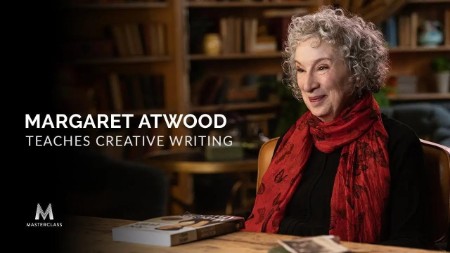
Masterclass – Margaret Atwood Teaches Creative Writing
01. Introduction
03. Story and Plot
Margaret illustrates the myriad ways you can structure your story and create a multi-layered narrative, using the classic tales Little Red Riding Hood, Arabian Nights, and her own novel The Blind Assassin as examples.
05. Who Tells the Story: Narrative Point of View
06. Point of View Case Studies
In this chapter, Margaret discusses her use of multiple points of view in Alias Grace, and why she wrote The Handmaid’s Tale from the first person point of view.
07. Bringing Characters to Life Through Detail
08. Creating Compelling Characters
Margaret teaches why the most compelling characters are often not very likeable, and delves into how gender plays into our expectations about character.
09. Writing Through Roadblocks
Learn Margaret’s advice for overcoming challenges such as constant interruption, writer’s block, or a narrative problem you can’t figure out how to solve.
10. Crafting Dialogue
Margaret teaches how to use dialogue to reveal character and story, and discusses the importance of making your dialogue authentic to the time and place in which your narrative transpires.
11. Revealing the World Through Sensory Imagery
The more specific your details, the more engaged your readers. Learn how Margaret uses The Handmaid’s Tale to illustrate her approach to imagery.
12. Prose Style and Texture
Learn the difference between style and description as Margaret illustrates two different prose style extremes-baroque and plainsong.
14. The Door to Your Book: The Importance of the First Five Pages
From Melville to Dickens, Margaret shares some of her favorite opening lines and underscores the value of making your first five pages utterly compelling.
15. Writing the Middle and Ending
Margaret teaches her approach to keeping readers engaged through the middle of your book and discusses the merits of closed and open endings to your story.
16. Revision: Seeing Your Work Anew
For Margaret, revision is an opportunity to take a fresh look at your book and consider new possibilities. Learn the value of soliciting feedback from select readers, and the importance of a good line editor.
17. The Novel and the Shifting Sands of Genre
Margaret discusses the evolution of the novel and asserts that the writer’s objective should be to stay true to the foundational elements of storytelling, regardless of genre.
Margaret reveals the ideas and research that inspired The Handmaid’s Tale, offering a first-hand look at some of these materials.
21. The Writer’s Path
Margaret reveals the one book she recommends to all writers, and shares inspirational stories from writers past and present to encourage you to persevere despite the obstacles you may confront.
22. The Business of Being a Writer
From finding an agent, to getting published, and dealing with negative reviews, Margaret offers her perspective on the business of being a writer.
Margaret bids her students farewell, sharing her desire to pass on her wisdom to the next generation of writers.
More Info

DDownload
https://www.keeplinks.org/p27/6899faf24bf67
RapidGator
https://www.keeplinks.org/p27/6899fb51199f6
NitroFlare
https://www.keeplinks.org/p27/6899fbef7195a