


Mastering Angular: From Basics To Advanced Development
Published 12/2024
MP4 | Video: h264, 1920×1080 | Audio: AAC, 44.1 KHz
Master Angular to build scalable web apps. Learn basics, advanced topics, RxJS, NGRX, routing, and deployment.
What you’ll learn
Students will learn how to build dynamic and responsive web applications using Angular.
They will gain expertise in implementing advanced Angular concepts such as routing, state management, and RxJS.
Learners will understand how to optimize Angular applications for performance and deploy them to production environments.
The course will teach students to secure Angular applications through authentication, authorization, and following best practices.
Requirements
Basic knowledge of HTML, CSS, and JavaScript is recommended, but it is not mandatory.
Students will need a computer with internet access to install Angular and its related tools.
Description
Overview
Section 1: Module 1: Introduction to Angular Basics
Lecture 1 1.1 Understanding the Basics of Angular
Lecture 2 1.2.1 Setting Up Your Development Environment
Lecture 3 1.2.2 Exploring project structure generated by Angular CLI
Lecture 4 1.3 Introduction to Components in Angular
Lecture 5 1.4.1 Data Binding in Angular
Lecture 6 1.4.2 Databinding – Component communication
Lecture 7 1.5.1 Directives in Angular
Lecture 9 1.5.3 Custom directives
Lecture 10 1.6.1 Project -1 Personal Portfolio Website
Lecture 11 1.6.2 Project Solution- Personal Portfolio Website
Section 2: Module 2: Advanced Angular Concepts
Lecture 12 2.1.1 Form Handeling- Introduction
Lecture 13 2.1.2 Form Handeling- Template Driven Forms- Lab Session
Lecture 15 2.1.4 Form Handeling- Reactive Forms
Lecture 16 2.1.5 Custom Validators
Lecture 17 2.2.1 Component Lifecycle
Lecture 18 2.2.2 Component Lifecycle – Lab Session
Lecture 19 2.3.1 Dependency injection -services
Lecture 20 2.3.2 Hierarchial Injector and injector tree
Lecture 21 2.3.3 Services for data sharing
Lecture 22 2.4.1 Routing and Navigation
Lecture 23 2.4.2 Routing and Navigation Lab Session
Lecture 24 2.4.3 Route configuration
Lecture 25 2.4.4 Navigate route pragmatically
Lecture 26 2.4.5 Route Parameters and Query Parameters
Lecture 27 2.4.6 Router Fragments
Lecture 28 2.4.7 Child Routes
Lecture 29 2.4.8 Route Guards
Lecture 30 2.4.9 Route Guards – canActivate
Lecture 31 2.4.10 Route Guards – canActivateChild
Lecture 32 2.4.11 Route Guards – canDeactivate
Lecture 33 2.4.12 Route Guards – Resolve
Lecture 34 2.4.13 Route Guards – Updates on new version
Lecture 35 2.5.1 Project – 2 Task Management Application
Lecture 36 2.5.2 Project 2 Solution
Section 3: Module 3: Advanced Angular Topics
Lecture 37 3.1.1 Creating Custom Structural Directives
Lecture 38 3.1.2 Using host listener and host binding
Lecture 39 3.1.3 ElementRef and Renderer2 for DOM manipulation
Lecture 40 3.2.1 Introdcution to RXJS
Lecture 41 3.2.2 Rxjs observables for handling async
Lecture 42 3.2.3 Operators
Lecture 43 3.2.4 Operators -lab
Lecture 44 3.2.5 Chaining and combining observables
Lecture 45 3.2.6 Promises
Lecture 46 3.2.7 Subjects
Lecture 47 3.2.8 Subjects – Continued
Lecture 48 3.3.1 View child and contentChild
Lecture 49 3.3.2 Dynamic component loading
Lecture 50 3.3.3 Communication between sibilings
Lecture 51 3.3.4 Http client integration
Lecture 52 3.3.5 CRUD
Lecture 53 3.3.6 Interceptor
Lecture 54 3.4.1 Project 3 -Introduction
Lecture 55 3.4.2 Project 3 -Lab
Section 4: Module 4: State Management and Deployment
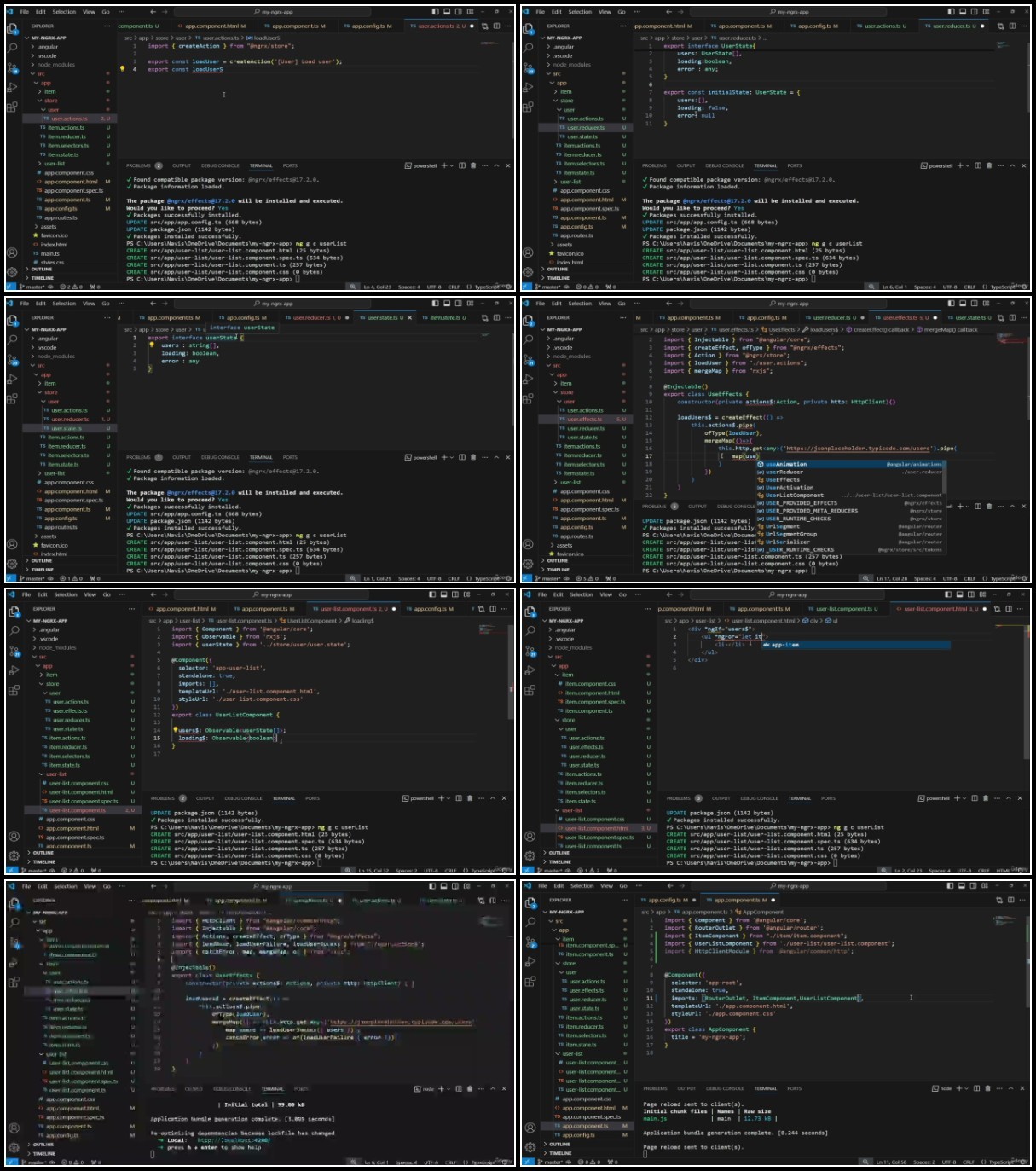
Lecture 56 4.1 State Mangement with Ngrx
Lecture 57 4.2 Mange application with Ngrx
Lecture 58 4.3 Application with Ngrx devtools
Lecture 59 4.4 Asynchronous state mgmt with Ngrx effects
Lecture 60 4.5.1 Deployment and Optimization
Lecture 61 4.5.2 Deploying Angular application
Lecture 62 4.6 Optimizing Angular Application
Lecture 63 4.7.1 Unit testing intro
Lecture 64 4.7.2 Unit testing with jasmin karma
Lecture 65 4.8 E2E testing
Lecture 66 4.9 Project 4-Introduction
Lecture 67 4.10 Project 4- Project Lab 1
Lecture 68 4.11 Project 4- Project Lab 2
Lecture 69 4.12 Project 4- Project Lab 3
Lecture 70 4.13 Project 4- Project Lab 4
Lecture 71 4.14 Project 4- Project Lab 5
Lecture 72 4.15 Project 4- Project Lab 6
Section 5: Module 5: Advanced Topics and Best Practices
Lecture 73 5.1.1 Internationalization and localization
Lecture 74 5.1.2 Angular pipes
Lecture 75 5.1.3 Ngx translate
Lecture 76 5.2.1 Lazy Loading
Lecture 77 5.2.2 Treeshaking and code splitting
Lecture 78 5.2.3 AOT compilation
Lecture 79 5.3.1 XSS abd CSRF
Lecture 80 5.3.2 Authentication and Authorization
Lecture 81 5.3.2.1 JWT example
Lecture 82 5.3.3.1 Securely storing sensitive data and API keys- 1
Lecture 83 5.3.3.2 Securely storing sensitive data and API keys- 2
Lecture 84 5.4.1 Nested routing and child route
Lecture 85 5.4.2 Route Resolver
Lecture 86 5.4.3 Preloading Strategies
Lecture 87 5.5 Extra Content
Lecture 88 5.6 Project 5 – Introduction
Lecture 89 5.7.1 Project 5 – Explanation- 1
Lecture 90 5.7.2 Project 5 – Explanation- 2
Lecture 91 5.7.3 Project 5 – Explanation- 3
Lecture 92 5.7.4 Project 5 – Explanation- 4
Section 6: Module 6: Final Project
Lecture 93 6.1 Final Project -Introduction
Lecture 94 6.2 Final Project Explanation
This course is for frontend developers who want to expand their skills with Angular.,It is suitable for beginners who are interested in learning a modern web development framework.,Professionals aiming to build scalable and maintainable web applications will find this course valuable.,It is also ideal for anyone preparing for a career in web development or frontend engineering.
RapidGator
https://filecrypt.cc/Container/302E0CB3C7.html
https://www.keeplinks.org/p27/679b6a6f23bfb
AlfaFile
https://filecrypt.cc/Container/400BE94FD8.html
https://www.keeplinks.org/p27/679b6af01ba37
TurboBit
https://filecrypt.cc/Container/33FB1E98BC.html
https://www.keeplinks.org/p27/679b6c7bdb22a