

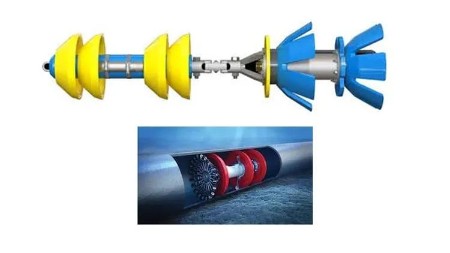
Pipeline Pigging Fundamentals: Inspection, Cleaning & Safety
Published 11/2025
Duration: 55m | .MP4 1920×1080 30fps(r) | AAC, 44100Hz, 2ch | 861.68 MB
What you’ll learn
– Pigging Basics: Define what a PIG is, how it moves, and the four critical functions they perform (Cleaning, Batching, Inspection, and Dewatering).
– Operational Hardware: Master the anatomy of Launchers and Receivers (Traps), including Kicker valves, Barrels, and Quick Opening Closures.
– Operations & Safety: Learn the step-by-step sequence for launching and receiving a pig safely, including isolation and verification.
– Physics & Control: Analyze pig velocity, understand optimal speed ranges for gas vs. liquid lines, and learn how bypass flow and electronic braking control spee
– Surveillance: Explore tracking methods like Electromagnetic (EM) transmitters, Acoustic tracking, and the "Leap-Frog" strategy.
– Standards: Navigate key industry standards including API 1163, ASME B31.8S, and ISO 22504.
Requirements
– Basic understanding of fluid mechanics or engineering terminology is helpful but not required.
– A desire to learn about oil and gas midstream operations.
Description
Are you an engineer, technician, or oil & gas professional looking to master the critical maintenance process known as "Pigging"?
Pipeline Pigs are the unsung heroes of the energy industry. They maintain flow efficiency, separate distinct products, and most importantly, use advanced sensors to inspect the health of pipelines from the inside out.
In this course,Pipeline Pigging Fundamentals, we break down the complex world of pipeline operations into clear, digestible modules. Whether you are dealing with routine cleaning or complex intelligent inspection runs, this course provides the technical foundation you need.
What You Will Learn:
Pigging Basics:Define what a PIG is, how it moves, and the four critical functions they perform (Cleaning, Batching, Inspection, and Dewatering).
Operational Hardware:Master the anatomy of Launchers and Receivers (Traps), including Kicker valves, Barrels, and Quick Opening Closures.
Operations & Safety:Learn the step-by-step sequence for launching and receiving a pig safely, including isolation and verification.
Physics & Control:Analyze pig velocity, understand optimal speed ranges for gas vs. liquid lines, and learn how bypass flow and electronic braking control speed.
Surveillance:Explore tracking methods like Electromagnetic (EM) transmitters, Acoustic tracking, and the "Leap-Frog" strategy.
Standards:Navigate key industry standards including API 1163, ASME B31.8S, and ISO 22504.
Course Structure:
Module 1:Fundamentals of Pigging (Definitions & Tasks)
Module 3:Launching & Receiving Operations (Trap Design & Sequence)
Module 4:Dynamics & Control (Velocity & Speed Control)
Module 5:Surveillance & Standards (Tracking & API/ASME Codes)
Who this course is for:
– Piping Engineers and Designers.
– Pipeline Integrity Engineers
– Oil & Gas Operations and Maintenance Technicians.
– Project Managers supervising pipeline inspections.
– Mechanical Engineering students seeking industry-specific skills.
More Info

RapidGator
https://www.keeplinks.org/p27/6935d4ca3e2d8
https://rapidgator.net/file/3ef21069b0cd240db7189b984a4b7f48/yxusj.Pipeline.Pigging.Fundamentals.Inspection.Cleaning.Safety.rar
NitroFlare
https://www.keeplinks.org/p27/6935d53fe1421
https://nitroflare.com/view/4DE2CA251647BBE/yxusj.Pipeline.Pigging.Fundamentals.Inspection.Cleaning.Safety.rar
DDownload
https://www.keeplinks.org/p27/6935d58dc1654
https://ddownload.com/9junn9z7olqu/yxusj.Pipeline.Pigging.Fundamentals.Inspection.Cleaning.Safety.rar