

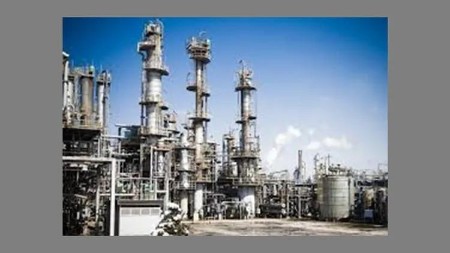
Process Piping Design: Vertical Vessels & Distillation Tower
Published 11/2025
Duration: 1h 25m | .MP4 1280×720 30fps(r) | AAC, 44100Hz, 2ch | 943.58 MB
Master the layout, nozzle orientation, piping routing, and mechanical design of refinery towers using industry standards
What you’ll learn
– Determine Tower Elevation: Calculate the required vessel height based on NPSH and reboiler hydraulic head to prevent pump cavitation
– Design Safe Access: Configure platforms, ladders, and safety cages according to vertical clearance standards (the 2100mm & 3600mm rules).
– Optimize Nozzle Locations: Correctly orient manholes, reflux inlets, and instrument nozzles to align with internal trays and downcomers.
– Route Process Piping: Design flexibility loops for feed lines and overhead vapor lines to handle thermal expansion.
– Engineer Vessel Supports: Select and design proper lifting lugs, davits, and pipe support clips welded to the vessel shell.
– Perform Mechanical Calculations: Apply formulas for wind load, seismic load, and shell stress analysis.
Requirements
– Basic understanding of engineering drawings (P&ID and Piping Isometrics).
Description
Are you ready to master one of the most critical components of a petrochemical plant?
Based on real-world industry design manuals (SEM standards), this course takes you beyond the theory and into the practical rules used by top EPC companies. You won’t just learn "what" a tower is; you will learn exactly where to place it, how to climb it, and how to pipe it.
What makes this course unique?We analyze actual engineering diagrams to distinguish between "Good" and "Bad" design practices. We cover the complete lifecycle of the design-from the initial plot plan location down to the specific weld clips on the shell.
Comprehensive Curriculum:
Module 1: Layout & Elevation:Understand how to position towers for maintenance access and calculate the critical installation height based on NPSH and pump requirements.
Module 2: Vessel Ergonomics:Master the design of platforms, ladders, davits, and lifting lugs to ensure operator safety and compliance with OSHA/PIP standards.
Module 4: Piping Routing:Dive into the routing rules for large-bore overhead lines, thermal expansion loops, and safety valve (PSV) discharge piping.
Module 5: Mechanical Calculations:Finally, we look at the math. Learn to calculate wind loads, seismic stresses, and the required shell thickness for your vessel.
Who is this course for?
Piping Designers & Draftsmen (SP3D/E3D/AutoCAD)
Process & Mechanical Engineers
Chemical Engineering Students
Plant Maintenance Technicians
Enroll today and gain the confidence to design complex tower layouts that meet international safety and operational standards.
Who this course is for:
– Piping Design Engineers
– Junior Mechanical Engineers
– EPC Professionals
– Oil & Gas Plant Designers
– Students interested in Process Plant Layout
More Info

RapidGator
https://www.keeplinks.org/p27/693af45083d26
https://rapidgator.net/file/71978f10f93675168747ba46409db796/process.piping.design.vertical.vessels..distillation.tower.rar
NitroFlare
https://www.keeplinks.org/p27/693af4ca9dc2e
https://nitroflare.com/view/4829AFEC9FE71DC/process.piping.design.vertical.vessels..distillation.tower.rar
DDownload
https://www.keeplinks.org/p27/693af512e1c3f
https://ddownload.com/8hqh2q7lvjog/process.piping.design.vertical.vessels..distillation.tower.rar