

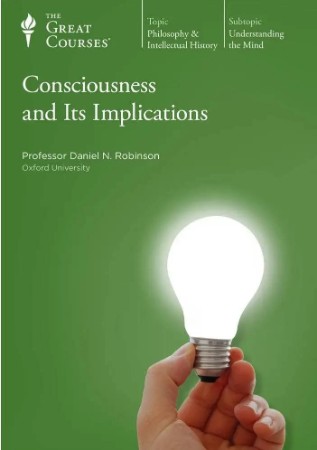
TTC Video – Consciousness and Its Implications
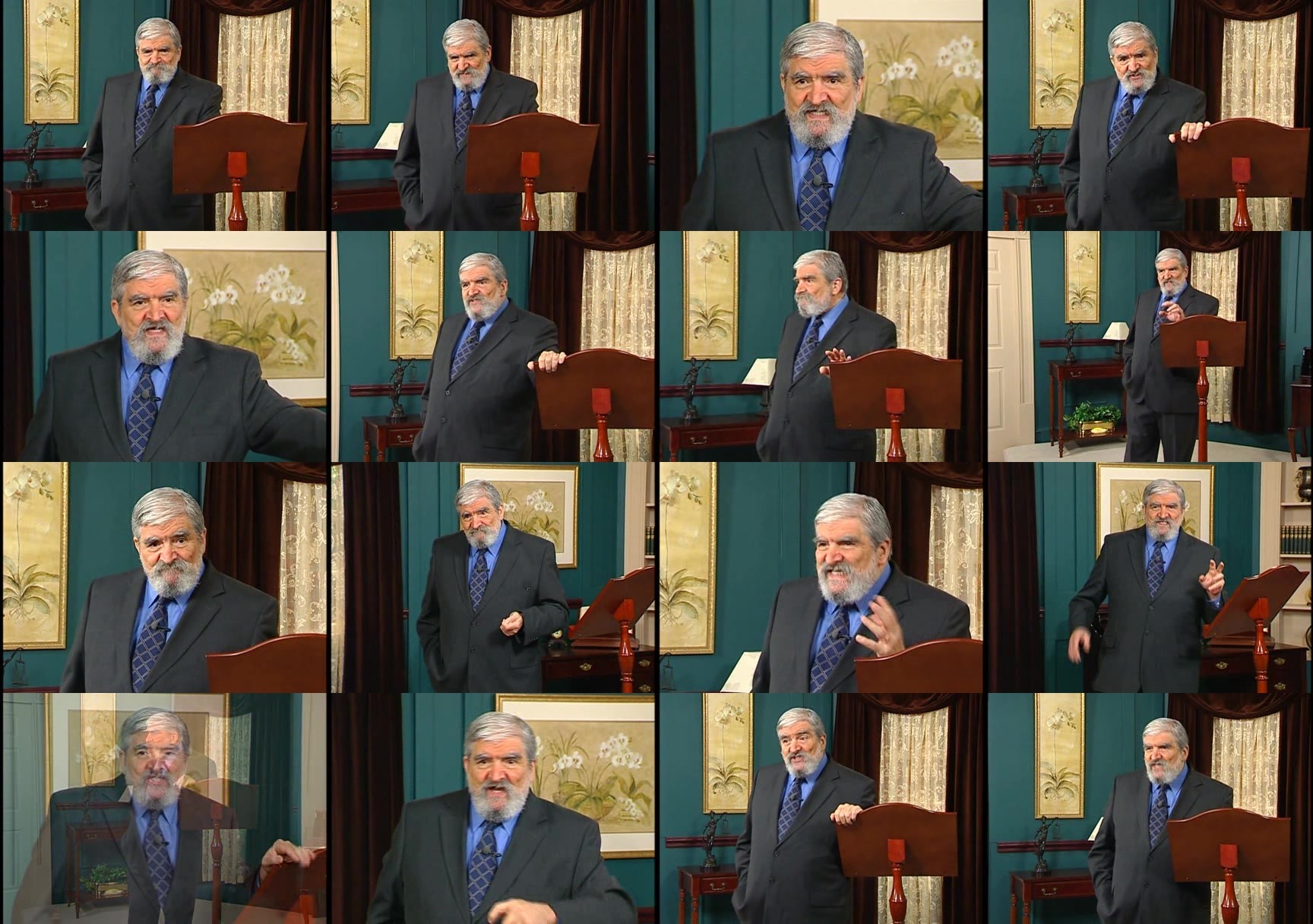
Lecturer: Daniel N. Robinson, Ph.D.
What is the most promising way to study this subject?
What are the implications that arise from the fact that we have consciousness?
What are the ethical and moral issues raised by its presence-or its absence?
What Is Consciousness?
But what makes Consciousness and Its Implications so engaging is more than just the nature of the questions it poses and the issues it tackles. It’s the way in which Professor Robinson, the consummate teacher and scholar, conveys this goal in four main points, each of which you explore in depth in these lectures.
Consciousness seems to require, for its full understanding, a science not yet available.
What distinguishes consciousness from all else is its phenomenology-that is, the act of being conscious is different from all other facts of nature.
Conscious awareness is a power that, at times, can be so strong as to greatly affect our senses.
The powers of consciousness vary over the course of a lifetime; as such, they can become subject to disease and defect.
Compelling Examples of Consciousness
Throughout the course, Professor Robinson brings this riveting topic vividly to life with real-world examples and striking anecdotes.
Consider the case of the sleepwalker, who moves around with purpose and mimics behaviors we see in everyday life, but can remember nothing upon awakening. How does this mental state relate to human consciousness? What would be lost if we lived our entire lives as sleepwalkers?
Study the case of a comatose patient who lives in an unbroken sleep state but, after a miraculous recovery, recalls having heard doctors speak about her. How do we interpret this patient’s ability to perceive the surrounding world while in a coma? Does the patient’s experience reflect some in-between mental state we’ve yet to define?
Look at the case of a child with autism who can perform complicated mental tasks but lacks the most basic human attribute: empathy. How does this inability to imagine other minds affect the child’s capacity to enjoy the full experience of human consciousness?
Using compelling examples such as these, Professor Robinson weaves a riveting tale of the human condition that will change the way you think about your own mind.
Probe Life’s Most Profound Philosophical Riddles
Professor Robinson also draws on the wisdom of the world’s greatest thinkers-from the ancient Greeks to today’s top scientists-to shed light on some of the ethical debates involved in any examination of consciousness. These include
John Locke, whose famous "Prince and the Cobbler" hypothesis raised questions about the relationship between one’s personal identity and one’s body;
Ludwig Wittgenstein, whose "Beetle in a Box" scenario holds implications for how we define consciousness both inside and outside ourselves; and
Aristotle, who led a pointed discussion on the relationship between the physical world and what he referred to as "real being."
So embark on a challenging and wholly satisfying exploration of this unique, mysterious, and essential mental faculty. The knowledge you’ll gain in this course is not only intriguing-it is crucial to understanding the nature of humanity and the social and ethical obligations that define us all.
DDownload
https://www.keeplinks.org/p27/68a1be0a32a7c
RapidGator
https://www.keeplinks.org/p27/68a1be552490e
NitroFlare
https://www.keeplinks.org/p27/68a1bef80e350