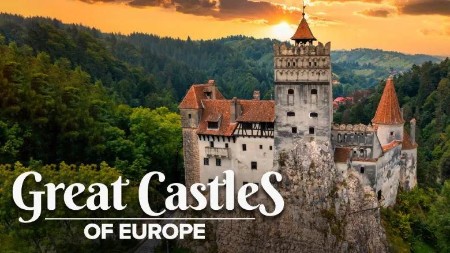
TTC Video – Great Castles of Europe
Lecturer: Victoria L. McAlister, PhD Professor, Towson University | Course No. 30570
The castles of Europe are one of the glorious legacies of the Middle Ages. Beautiful and fascinating to explore, great castles dazzle us with their grandeur, and their power to evoke an age of lords and ladies, knights and peasants, battles and sieges. But beyond their architectural majesty and romantic allure, great castles offer something much more.
- The Alhambra of Spain. The exquisite interiors of the complex’s Palace of the Lions were the sumptuous royal residence of the sultans of the Nasrid Dynasty.
- Denmark’s Kronborg Castle. Immortalized by Shakespeare as Elsinore in Hamlet, this superbly elegant Renaissance castle served principally as a customs station for passing ships.
- Massive Malbork Castle. Located in Poland, this classic medieval castle served as the administrative hub of a political state and the center of huge commercial networks.
- France’s Carcassonne. One of the most beautiful and iconic medieval walled cities in Europe, Carcassonne emblemizes military action at castles, seeing a devastating siege during its tumultuous history.
In Great Castles of Europe, you’ll enjoy a spectrum of the most magnificent and historic edifices ever built, and a richly detailed view of life in the Middle Ages.
Masterpieces of Medieval Architecture
While we tend to associate castles with warfare, their defensive role was only one side of their story. You’ll learn that a great majority of castles never saw sieges or military conflict. At the beginning of Great Castles of Europe, you’ll look at the three functions that historians dictate that a structure must serve in order to be considered a castle. Castles must have:
- Defensive Capabilities encompassing the architectural elements of curtain walls, battlements, towers, gateways, moats, and more;
- Administrative Functions as centers of manorial estates and local affairs, encompassing roles such as agricultural production, courts of law, tax collection points, religious centers, and much more.
Within this context, you’ll explore the multidimensional lore of castles in the Middle Ages, as the story unfolds across the European world:
- Christian Fortresses of the Holy Land. Witness the proliferation of castle-building during the Crusades, in the crusader kingdoms of the Mediterranean, often under the aegis of the military orders of the Teutonic Knights and Hospitallers. Take in the site of the awe-inspiring Crac des Chevaliers, its elaborate concentric design and innovative military architecture.
- Monastic Castles of Eastern Europe. In the wake of Europe’s crusades against pagan peoples, relive the era of conquest, religious conversion, and colonization that produced Baltic castles that resembled fortified monasteries. Delve into the scholarly and scientific study of Latvia’s Cēsis Castle, administrative center of military orders and the site of fierce battles and sieges.
Castles and Medieval Lives
You’ll discover that there were multiple cases of women who not only owned and managed castles, but also who built them and defended them militarily. Among these cases, you’ll follow the stories of castle builder, Lady Roesia de Verdun; heiress Isabel de Clare, who defended the siege of Kilkenny Castle; and Margaret Paston, matriarch and estate manager of England’s Caister Castle. You learn Margaret’s story from the astonishing Paston letters, a trove of documents that tell the incredible narrative of one family’s struggle to hold onto a castle through wars and politically volatile times.
The 24 eye-opening lectures of Great Castles of Europe offer you a deep and unforgettable encounter with some of history’s most remarkable buildings, and with the extraordinary human sagas that took place within their walls.
More Info