Using Data Science for Retail Store Segmentation
Published 4/2025
Duration: 4h 1m | .MP4 1280×720, 30 fps(r) | AAC, 44100 Hz, 2ch | 1.99 GB
Use data science for store segmentation: data preprocessing, EDA, clustering, and segment profiling in retail
What you’ll learn
– An approach for applying the data science lifecycle to a real-world retail segmentation problem
– Preprocess and transformation of retail data for analysis
– Performing exploratory data analysis
– Interpretation of PCA components in a clustering context
– How to build and evaluate stable store clusters using machine learning
– Profiling segments in cluster analysis using Decision Trees
– Describe and present store segments in a way that supports decision-making
Requirements
– Python Programming
– BigQuery
– Machine Learning (PCA, Decision Tree, K-Means)
– Scikit-Learn
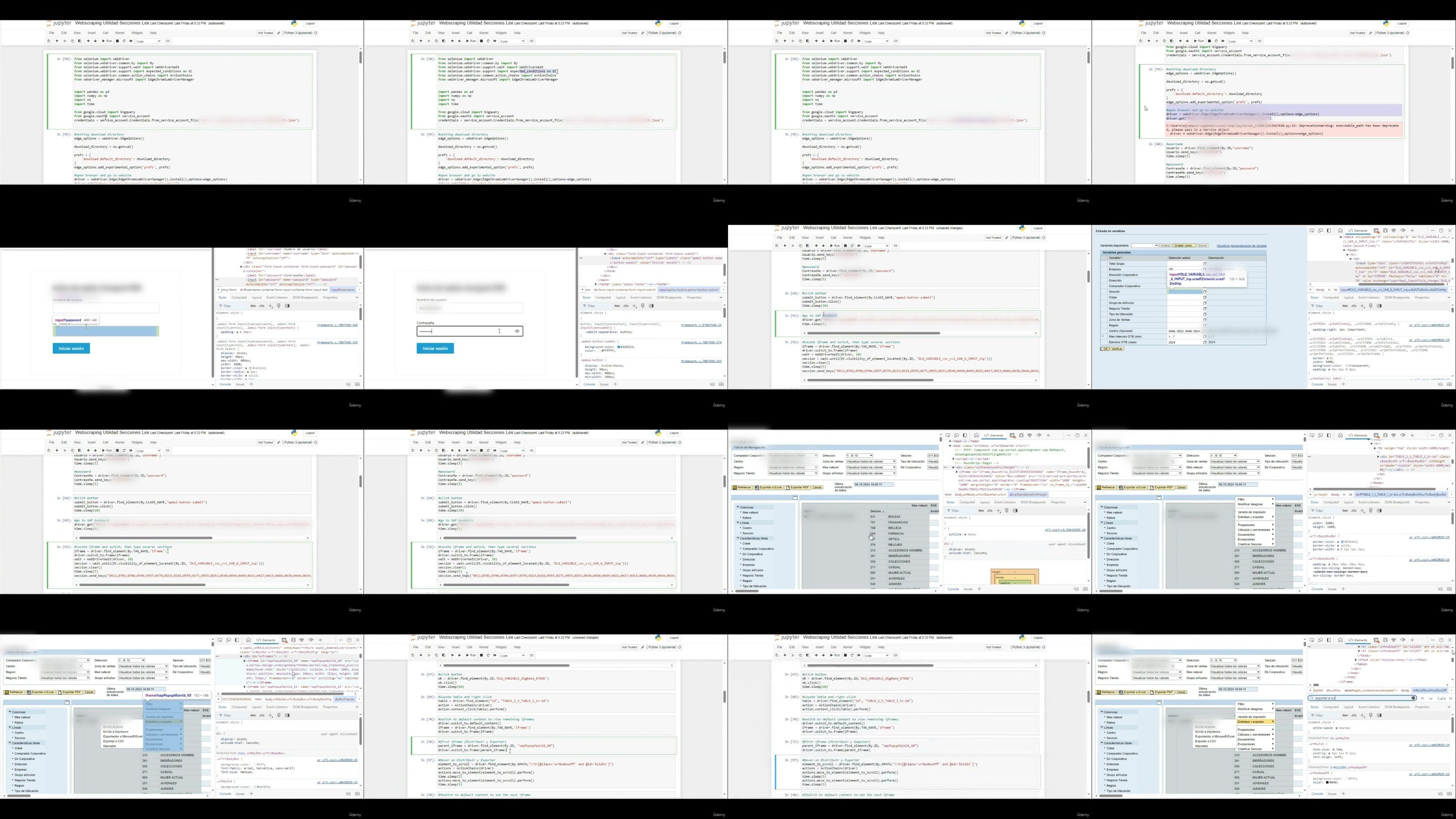
– Webscraping Selenium
Description
This course guides you through applying machine learning and data science techniques to build a store segmentation from raw data in order to generate actionable, easy-to-understand segments for stakeholders. Based on a real-world project implemented in a retail company (with synthetic data due to confidentiality), the course follows key steps in the data science lifecycle.
Next, we dive into data cleaning, preprocessing, and feature engineering, followed by exploratory analysis using correlation matrices, distribution plots, and boxplots. We apply data transformations such as winsorization, Yeo-Johnson, and standardization before running a PCA to explore latent structure and guide the segmentation process.
For modeling, we focus on finding the most stable clustering solution, using Jaccard similarity to evaluate consistency across random states. We evaluate the optimal number of clusters with the Elbow method and assess quality of the clustering using Silhouette score.
To describe the resulting segments, we adapt a profiling technique inspired by SAS Miner. We use decision trees to identify the most distinguishing features per segment, then visualize distributions to compare each segment against the overall population. This allows us to craft simple, stakeholder-friendly descriptions based on key deviations.
Finally, we wrap everything up with a presentation of results, ready to support data-driven decision-making in a retail context.
Who this course is for:
– Machine learning Practitioners with an Interest in Retail Segmentation
– Data Scientists in Retail Companies
– Data Analysts in Retail Companies
– Data Scientists / Analysts in General
More Info